


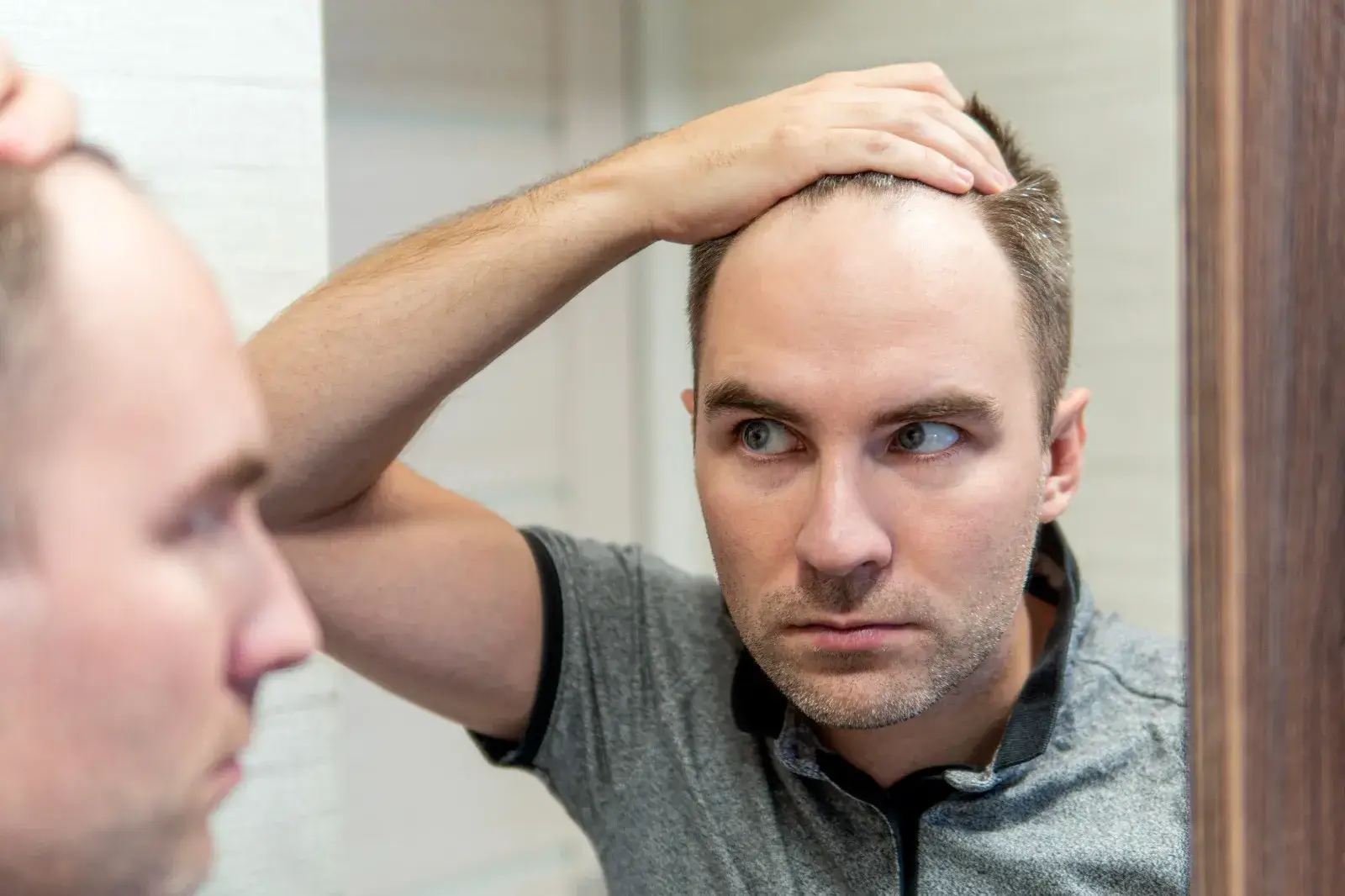
A hairline that gradually moves backwards or a crown that looks thinner in photographs can be an early sign of male pattern baldness. These changes often develop slowly, making them easy to overlook until the thinning becomes more noticeable.
Also called androgenetic alopecia, this condition can often be managed with treatment, particularly when assessed early. Understanding the pattern of hair loss, its likely progression and the available options helps you make informed decisions about your hair.
Understanding Androgenetic Alopecia
Male pattern baldness develops through a combination of inherited susceptibility and the effects of androgen hormones, particularly dihydrotestosterone, or DHT.
In susceptible follicles, DHT contributes to a process called miniaturisation. Over successive growth cycles, affected follicles produce finer, shorter hairs, gradually reducing coverage. The temples, frontal scalp and crown are commonly affected, while the back and sides usually retain more hair.
This sensitivity does not necessarily mean that someone has unusually high testosterone levels. How the follicles respond to hormones is an important part of the condition.
Early Warning Signs of Male Pattern Baldness
Early signs of hair loss are often changes in coverage or hair texture rather than dramatic shedding. You might notice:
- Increasing recession at the temples.
- A more pronounced M-shaped hairline.
- Greater scalp visibility around the crown.
- Finer, shorter hairs within thinning areas.
- A gradual reduction in fullness across the top of the head.
Male pattern hair loss usually develops gradually. Sudden shedding across the scalp can have other causes, including illness, significant weight loss or nutritional deficiency. These can also occur alongside hereditary thinning, so a change in shedding should not be used to diagnose the condition by itself.
To monitor changes, take photographs of your hairline, temples and crown approximately once a month. Keep the lighting, camera angle and hairstyle consistent, and photograph your hair when it is dry each time. Photographs can support an assessment, but they cannot replace a scalp examination.

Norwood Scale: Stages of Hair Loss
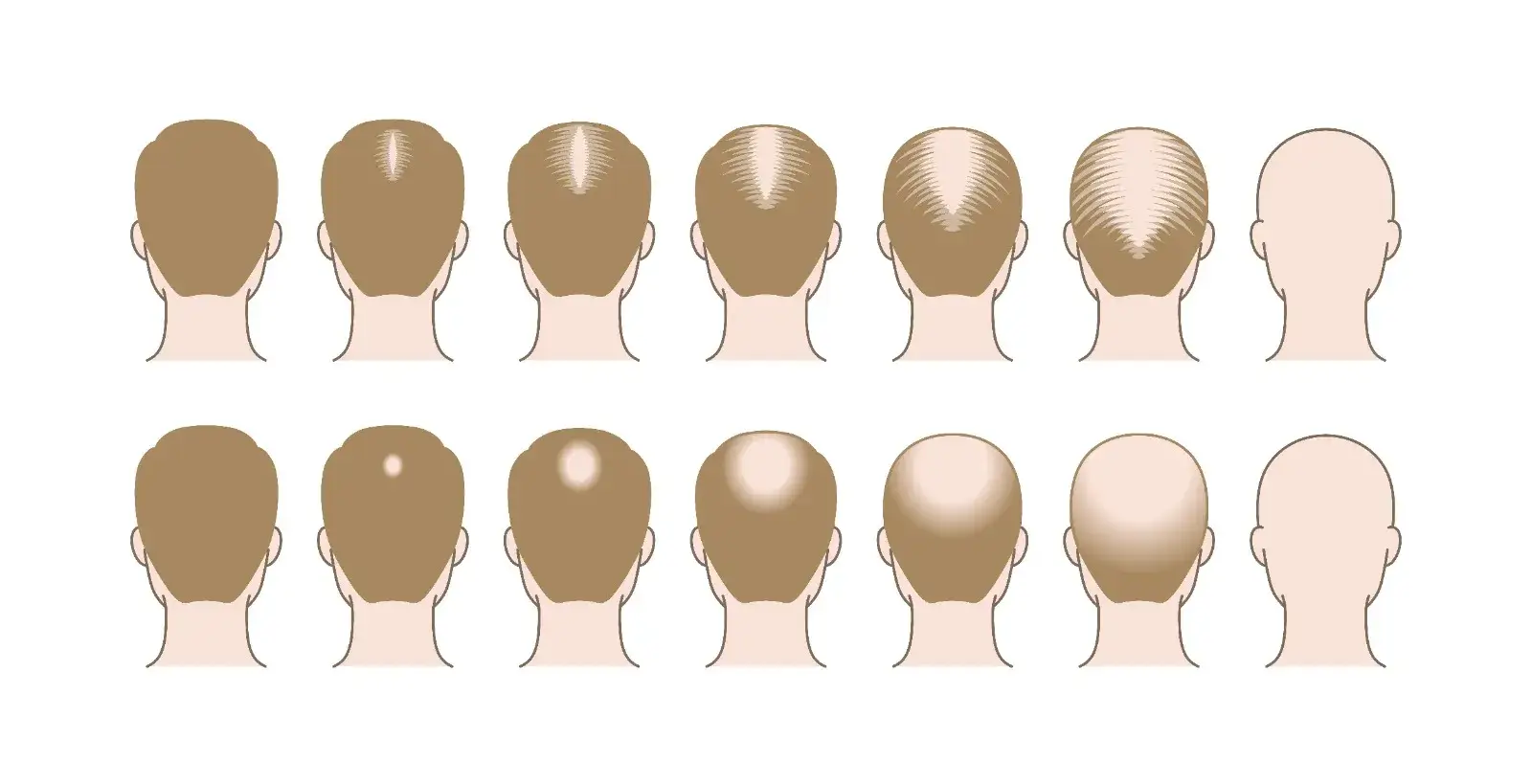
The Hamilton–Norwood scale describes common patterns of male hair loss. It ranges from minimal recession to extensive loss across the top of the scalp.
|
Stage |
Typical appearance |
|
Norwood 1 |
Little or no visible hairline recession. |
|
Norwood 2 |
Mild recession at the temples. |
|
Norwood 3 |
Deeper temporal recession; the vertex variant mainly involves crown thinning. |
|
Norwood 4 |
More pronounced frontal and crown loss, with a band of hair separating them. |
|
Norwood 5 |
The separating band becomes narrower as the thinning areas expand. |
|
Norwood 6 |
Frontal and crown loss join as the separating band disappears. |
|
Norwood 7 |
Extensive loss across the top, leaving a horseshoe-shaped band around the sides and back. |
The scale is a descriptive tool rather than a timetable. It does not predict how quickly an individual’s hair loss will progress, and some patterns do not fit neatly into its stages.
Age Factors and Genetics
Male pattern baldness can begin after puberty, including in the late teens or twenties. For others, noticeable thinning develops much later. Earlier onset can be associated with more extensive hair loss over time, although individual experiences vary.
Susceptibility can come from either side of the family. Looking only at your maternal grandfather’s hair will not reliably predict your future hairline. Relatives may also develop different patterns and degrees of thinning.

Treatment Timeline: When Should You Start?
If you notice progressive recession or crown thinning, arrange an assessment rather than waiting for a large bald area to develop. A dermatologist can examine the pattern, check for miniaturisation and consider whether another cause is contributing.
Treatment generally offers a better opportunity to preserve existing hair when started early. However, starting treatment is a personal decision: the diagnosis, potential benefits, side effects and practical commitment all matter.
What to Expect During Treatment
The following timeline provides a general guide for medical treatment. The timing of reviews and visible changes will depend on the treatment prescribed and your individual response.
|
Period |
Main focus |
|
Before treatment |
Confirm the diagnosis, discuss suitability and take baseline photographs. |
|
First weeks |
Establish consistent use and monitor tolerance. Some minoxidil users experience temporary increased shedding. |
|
Around 3 months |
Review consistent use and side effects; visible density changes may still be limited. |
|
Around 6 months |
Assess the initial response with your clinician and compare photographs. |
|
Around 12 months |
Review the longer-term result and whether the plan needs adjustment. |
Minoxidil may take 6–12 months to show visible benefits. Finasteride also requires several months, and some people need longer before its effect can be judged. Maintaining existing hair can be a meaningful treatment outcome even when regrowth is modest.
Treatment Options for Male Pattern Baldness
Topical Minoxidil
Topical minoxidil is an established option that can stimulate hair growth and help reduce further loss. It is applied to the scalp according to the product instructions or a clinician’s advice.
Possible side effects include scalp irritation and temporary early shedding. Results vary, and continued use is generally needed to maintain the benefit.
Prescription Finasteride
Finasteride reduces the conversion of testosterone to DHT. It can help slow male pattern hair loss and may support some regrowth.
A prescribing clinician should discuss suitability and potential side effects, including sexual problems, depression and other mood changes. Sexual side effects have also been reported to persist after stopping treatment. If you develop depression or suicidal thoughts while taking finasteride for hair loss, stop taking it and seek medical advice promptly.
Other Medical Options
A dermatologist may consider alternatives such as low-dose oral minoxidil or dutasteride in selected cases. Approval for hair loss varies by country, and these medicines require individual assessment and appropriate monitoring.
Platelet-rich plasma injections and low-level light therapy may also be discussed. Evidence, treatment protocols and outcomes vary, so potential benefits, limitations and maintenance requirements should be reviewed before committing to a course.
Hair Transplantation
Hair transplantation moves follicles from donor areas into areas with reduced coverage. It may be suitable for selected people with an adequate donor supply and a realistic long-term plan.
The procedure redistributes existing follicles; it does not prevent further thinning of surrounding, non-transplanted hair. Ongoing medical management may therefore remain relevant.
Combining Treatments for Male Pattern Baldness
A clinician may recommend combining oral finasteride with topical minoxidil because they act through different mechanisms. This combination may offer greater benefit than either treatment alone in suitable men, but suitability and potential side effects should be assessed individually.
A practical plan may also include treatment for an accompanying scalp condition and correction of a confirmed nutritional deficiency. Supplements should be selected according to need: taking extra nutrients without a deficiency does not reliably treat hereditary hair loss, and excessive amounts of some nutrients can contribute to shedding.
Daily hair care has a supporting role. Appropriate cleansing and conditioning can improve scalp comfort, manageability and the appearance of existing hair. When choosing an MD Plus Bio routine, focus on these cosmetic goals alongside any medical treatment recommended for androgenetic alopecia.