

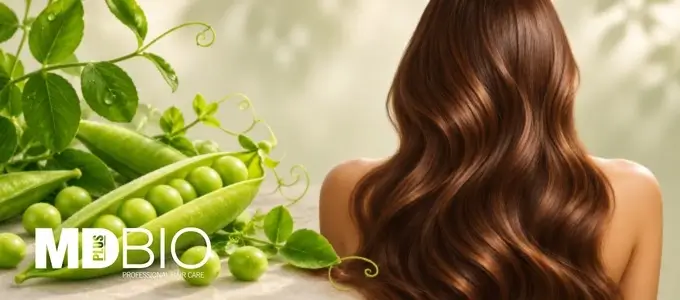
AnaGain is a pea sprout extract used in hair-care products designed for thinning hair. It has attracted interest because early research suggests it may influence signals involved in the hair growth cycle. However, understanding its potential means looking beyond descriptions such as “natural hair growth breakthrough” and examining what researchers have actually measured.
For anyone comparing scalp serums or exploring plant-derived ingredients, the key questions are practical: how does AnaGain work, how convincing is the evidence, and how does it compare with established treatments such as minoxidil?
The research offers reasons for interest, alongside limitations that deserve a clear explanation.
What is AnaGain?
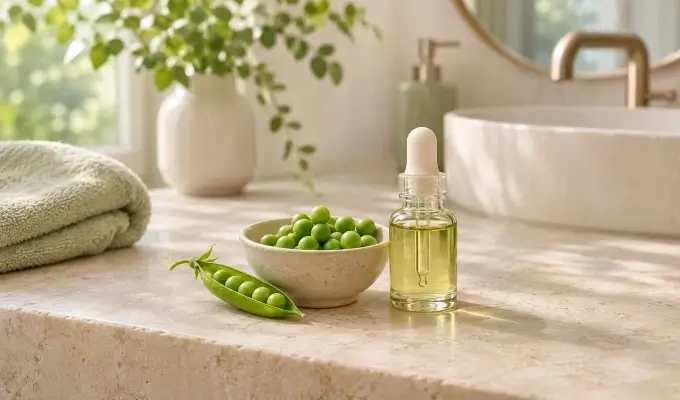
AnaGain is a branded cosmetic ingredient developed by Mibelle Biochemistry from organic sprouts of Pisum sativum, the common garden pea. On a cosmetic ingredient list, the extract appears as Pisum Sativum (Pea) Sprout Extract.
It is supplied in different formats for use in cosmetic formulations. A separate ingredient, AnaGain Nu, is intended for oral supplements. Although both originate from pea sprouts, research on a supplement cannot automatically establish the effectiveness of a topical serum. The route of administration, formulation and study outcomes all matter.
AnaGain should also be distinguished from other pea-derived ingredients. A product containing pea protein is not necessarily formulated with AnaGain, and a shared botanical source does not mean that two ingredients have identical properties.

How is AnaGain made?
The process begins with germination. According to the manufacturer, pea seeds are soaked in water and cultivated under controlled conditions. During cultivation, rotating equipment helps distribute light, air and water so the sprouts develop evenly. The harvested material is then processed into the cosmetic ingredient.
The resulting extract is water-soluble. Formulators can incorporate it into suitable water-based products or emulsions, following the supplier’s processing guidance. It is not oil-soluble, so its inclusion in a formula requires more than simply mixing it into a hair oil.
This distinction also explains why homemade pea preparations are not equivalent to a formulated product. Preservation, stability and the way an ingredient is delivered are important parts of cosmetic development.
Organic pea sprouts and their amino acid profile
Germination changes the composition of a seed as it begins to grow. The manufacturer describes germinated peas as a source of nutrients, including free amino acids such as L-arginine.
That nutritional background is relevant to the choice of raw material, but it should not be confused with proof of effectiveness on the scalp. To evaluate a claim about amino acids properly, researchers would need to establish their concentration in the finished extract and demonstrate a meaningful benefit under the intended conditions of use.
Likewise, “organic” describes the cultivation of the source material. It does not independently demonstrate stronger hair growth results.
The most useful explanation of AnaGain therefore focuses on research into the extract itself, rather than assuming that a nutrient-rich plant must produce a clinically effective hair product.
How might AnaGain support the hair growth cycle?
AnaGain’s proposed action involves signalling associated with hair follicles. Research has focused particularly on fibroblast growth factor 7, known as FGF7, and noggin.
In a small topical investigation, ten volunteers applied a preparation containing 2% AnaGain twice daily for two weeks. Analysis of plucked follicles found increased expression of genes associated with these signalling molecules.
This provides a biological reason to investigate the ingredient further. However, an increase in gene expression is not the same as a measured increase in visible hair.
When an ingredient is described as stimulating dermal papilla signalling, the practical question remains: does that activity translate into a meaningful cosmetic improvement? Answering it requires studies measuring outcomes such as hair density, strand diameter and scalp coverage over an appropriate period.
What do clinical studies show?
Research claims become easier to interpret when the measurements are clearly defined. “Hair growth”, “thickness” and “reduced shedding” are often used together, but they describe different outcomes.
Measurement | What it tells us | What it does not prove alone |
Hair density | How many hairs are present within a defined area | That individual strands have become thicker |
Hair-fibre diameter | The width of individual strands | That more hairs are growing |
Shedding count | How many hairs are collected using a specified method | How much new hair has grown |
Anagen-to-telogen ratio | The balance between growing and resting hairs | A matching percentage increase in scalp coverage |
Participant assessment | How users perceive their hair | An objectively measured change |
Topical AnaGain research
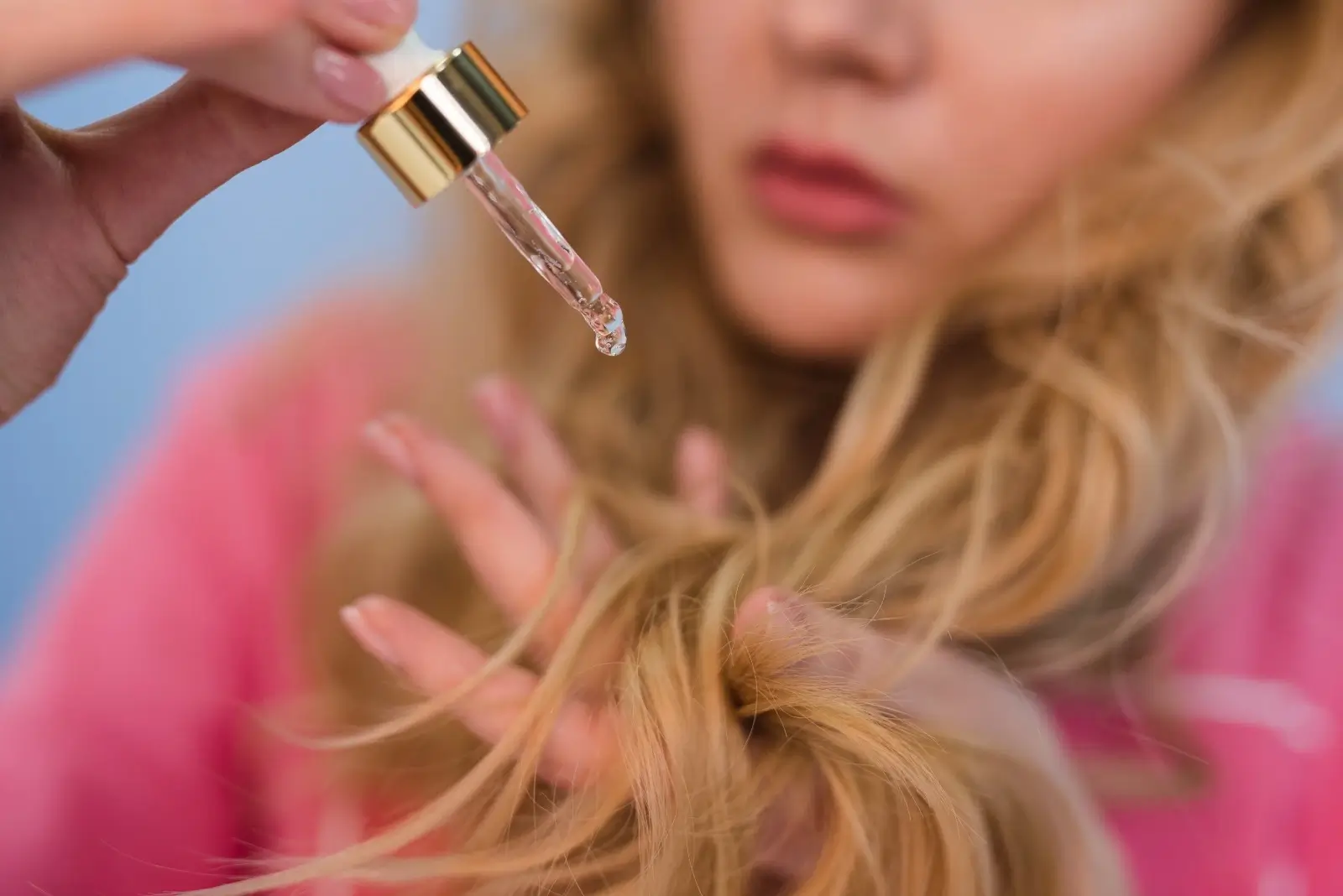
The manufacturer reports an improvement in the anagen-to-telogen ratio from approximately 4 to 7.2 during a three-month cosmetic study. This result is sometimes expressed as a 78% improvement.
The percentage refers to the ratio being measured. It should not be interpreted as 78% more hair or a 78% increase in individual strand thickness.
Oral pea sprout extract research
A pilot study published in Phytotherapy Research reported reduced shedding among 21 participants who completed eight weeks of daily supplementation with 100 mg AnaGain Nu. However, the study was small, lacked a placebo control and was conducted by authors affiliated with the ingredient manufacturer. Independent confirmation remains important.
Does AnaGain increase hair-fibre thickness?
These findings do not establish a predictable increase in individual hair-fibre diameter. A fuller appearance, a change in hair-cycle measurements and thicker individual strands are separate outcomes.
A useful product claim should explain which outcome was measured rather than treating all three as interchangeable.
AnaGain vs minoxidil: what is the difference?
Comparing AnaGain with minoxidil helps clarify their respective roles. AnaGain is a cosmetic ingredient with preliminary supporting research. Topical minoxidil is an established medicine used for pattern hair loss.
Their evidence bases are different, so they should not be presented as interchangeable options.
Aspect | AnaGain | Topical minoxidil |
Ingredient type | Branded pea sprout extract used in cosmetic formulations | Medicinal active used in hair loss treatments |
Supporting evidence | Small ingredient studies; further independent research is needed | Placebo-controlled clinical trials and established clinical use |
Expected role | A potential component of cosmetic care for thinning hair | Treatment of pattern hair loss in suitable users |
Tolerability | Natural origin does not establish superior tolerability; the complete formula matters | Possible effects include itching, scalp irritation and unwanted hair growth |
Continued use | Long-term outcomes after stopping are not well established | Continued use is generally needed to maintain regrowth in pattern hair loss |
Minoxidil’s product information documents both clinical efficacy and potential adverse effects. It does not work for everyone, and suitability depends on the individual and the specific preparation.
There is insufficient evidence to claim that AnaGain is equally effective, necessarily gentler or an ideal substitute for people with scalp irritation. A botanical ingredient can still be part of a formula that an individual does not tolerate.
Products containing AnaGain: what should you look for?
Start with the current ingredient list and intended use. Is the product designed for application to the scalp? Is it rinsed off or left in place? Are the instructions clear and practical?
A leave-in serum and a shampoo have different application patterns. Without comparative testing, the presence of the same active does not establish equivalent performance.
MD Plus Bio Hair Repair Serum lists AnaGain alongside ingredients including Capixyl, Redensyl and Procapil. As a leave-in scalp formula, it illustrates how pea sprout extract can form part of a broader hair-care routine. However, research on an individual ingredient should not be presented as a clinical trial of the complete serum. Always consult the current label for the full formulation and directions.
This approach keeps product selection focused on the whole formula rather than a single recognisable ingredient.
Combining AnaGain with other actives
AnaGain may appear alongside other cosmetic actives in formulas developed for thinning hair. The rationale is to bring together ingredients with different intended functions, but a combination needs its own evidence before stronger results can be claimed.
When assessing a formula, ask:
- Was the finished product tested, or only its ingredients?
- Did the study measure the benefit being advertised?
- Was the combination compared with its individual components?
- Does the tested formulation match the product being sold?
A longer ingredient list does not automatically mean greater effectiveness. Equally, combining several separate serums at home does not reproduce a professionally developed formulation.
If you use medicinal scalp treatments, ask a pharmacist or clinician how additional products should fit into your routine. The ingredient names alone cannot establish that a particular combination or application schedule is appropriate.
Setting realistic expectations
Choose a clear goal before assessing a hair-care product. Improved manageability, reduced breakage, less shedding and greater density are different benefits and should be evaluated separately.
For a practical record, take photographs using the same lighting, parting and camera position. Keep hair condition consistent, too: wet hair and freshly styled hair can give very different impressions of coverage.
Record when you start a product and avoid changing several parts of your routine simultaneously. This makes observations easier to interpret, although photographs and personal notes cannot replace a clinical assessment.
Persistent thinning also deserves attention to its cause. The NHS lists illness, stress, weight loss and iron deficiency among possible contributors to hair loss and recommends consulting a GP if you are concerned.
AnaGain is a promising cosmetic ingredient, but its most appropriate role is within a routine guided by accurate information, suitable product selection and realistic expectations.