


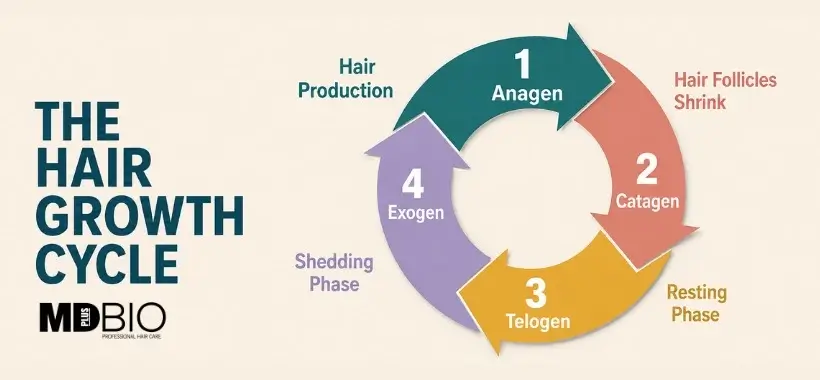
Hair does not grow continuously. Every follicle follows an independent biological cycle involving growth, transition, rest and eventual shedding. This process is known as the hair growth cycle, and it helps explain why some hair falls out every day, why sudden shedding may appear months after illness or stress, and why hair-loss treatments require time to produce visible results.
The three principal hair follicle phases are anagen, catagen and telogen. Many specialists also describe exogen—the release of the resting hair—as a separate shedding stage. Because scalp follicles do not all enter the same phase simultaneously, healthy hair normally maintains relatively stable coverage despite continuous renewal.
Understanding these stages can make changes in density, shedding and regrowth easier to interpret. It also highlights an important point: effective hair-loss management begins with identifying why the cycle has changed, rather than simply trying to accelerate growth.
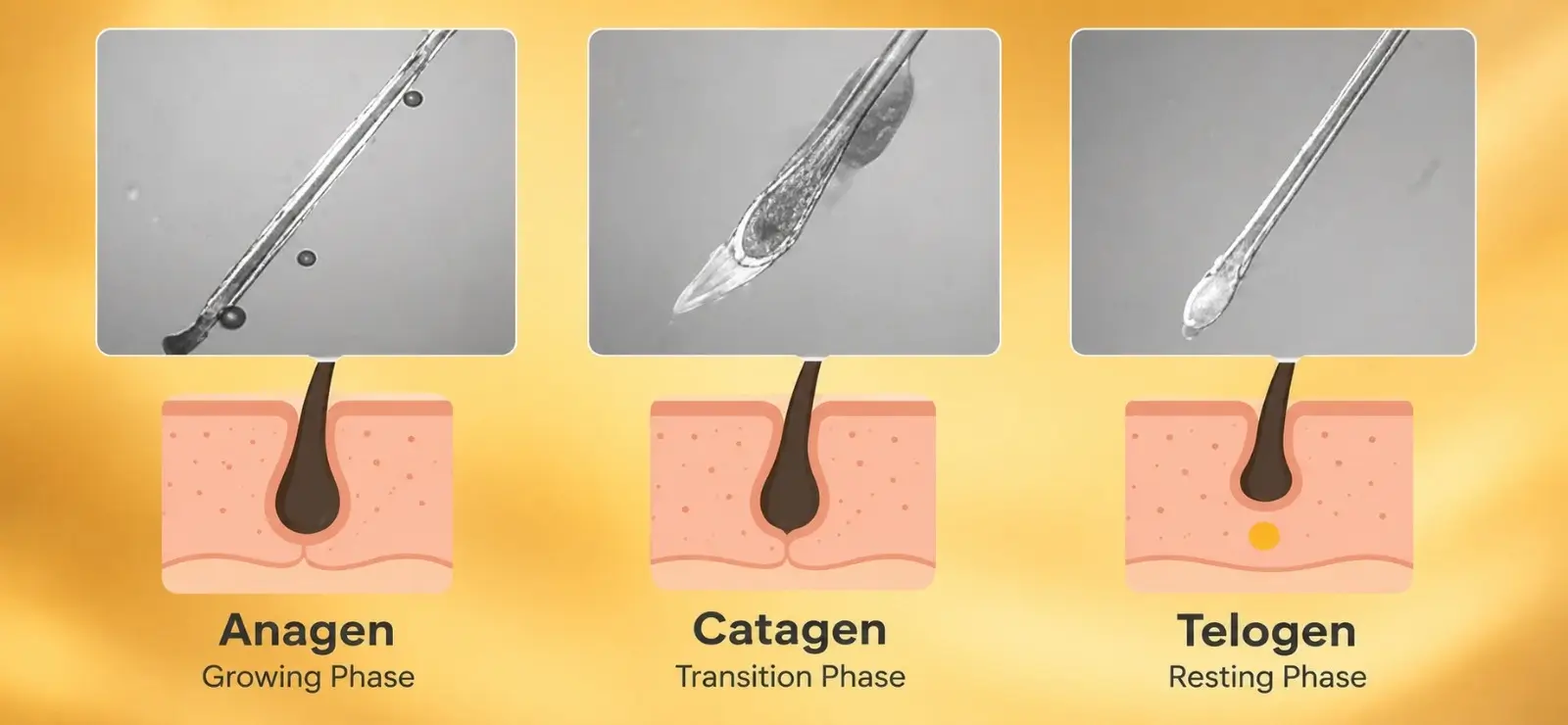
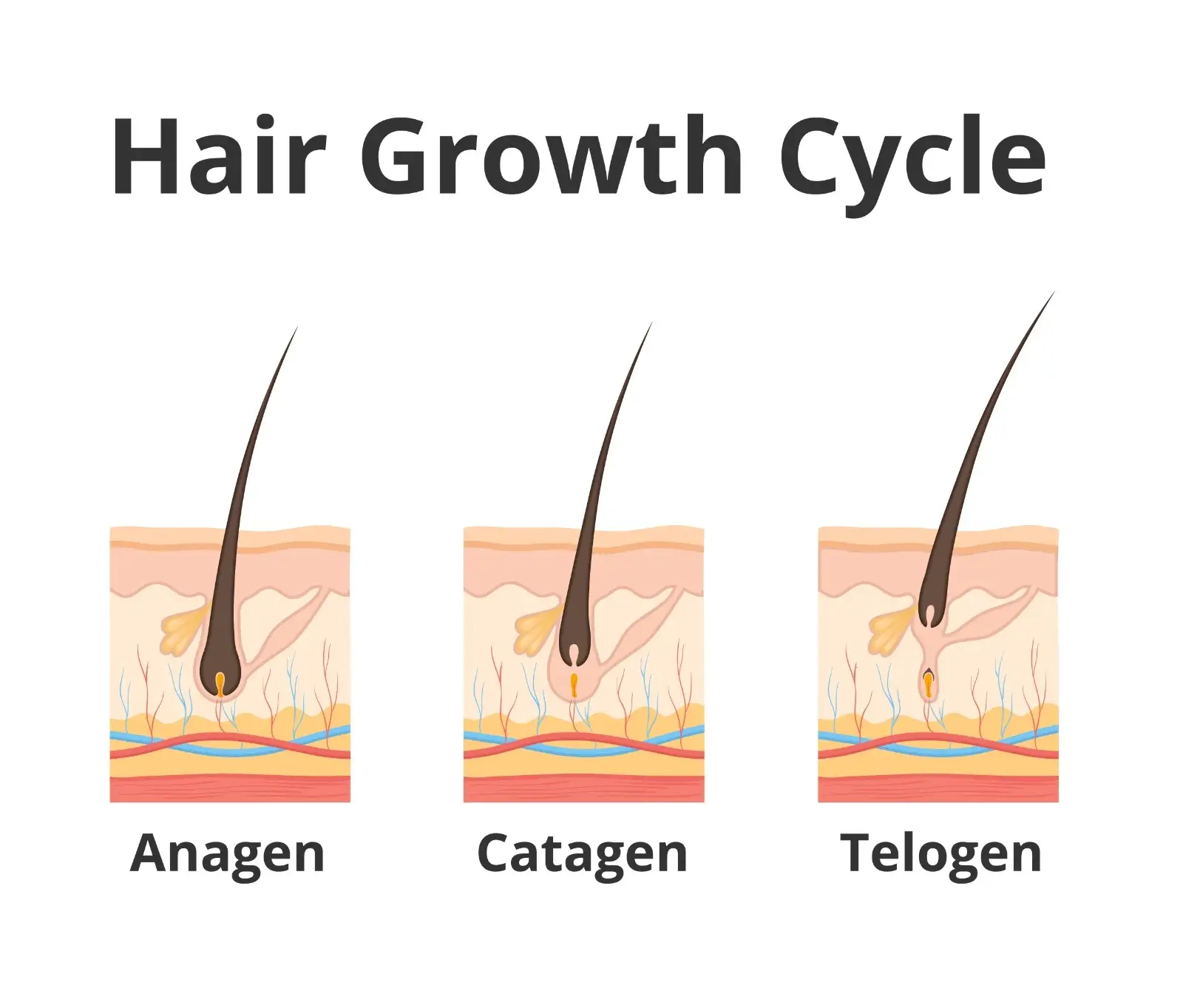
The Three Phases of Hair Growth
- Anagen: the active growth phase
The anagen phase is the longest and most biologically active stage of the cycle. Cells in the hair matrix divide rapidly, while the follicle extends deep into the skin and produces a new hair fibre. Blood vessels surrounding the dermal papilla help supply oxygen and nutrients needed for this cellular activity.
Around 85–90% of healthy scalp follicles are usually in anagen at any given time. Scalp hair grows approximately 1 centimetre—or about 0.4 inches—per month, although the rate varies according to genetics, age, health and body area.
Anagen may continue for several years. Its duration is one of the main factors determining how long a person’s hair can naturally become. Someone with a relatively short anagen phase may find that their hair reaches a certain length before shedding, even when the strands are otherwise healthy.
In androgenetic alopecia, commonly called male or female pattern hair loss, genetically susceptible follicles gradually spend less time in anagen. The follicles also undergo miniaturisation, producing progressively shorter and finer hairs.
- Catagen: the transition phase
Catagen is a brief but highly organised transition between active growth and rest. Cell division slows and stops, the lower portion of the follicle regresses, and the follicle separates from much of its blood supply.
This regression involves apoptosis, a controlled process of cellular breakdown that is part of normal follicle renewal. The hair does not immediately fall out. Instead, it develops into a fully keratinised club hair that remains in place while the follicle prepares for telogen.
Only about 1% of scalp follicles are normally in catagen at one time. Because the phase is short and affects relatively few follicles, it is rarely noticed directly.
- Telogen: the resting phase
During the telogen phase, active production of the hair shaft pauses. The club hair remains within the follicle until it is eventually released, often as a new anagen hair begins forming beneath it.
Approximately 10–15% of scalp hair is usually in telogen. This percentage can temporarily increase following illness, childbirth, severe stress, surgery, nutritional deficiency or certain medications. When an unusually large number of follicles enter telogen together, diffuse shedding may develop several months later. This condition is called telogen effluvium.
What is the exogen phase?
Exogen refers specifically to the release and shedding of the club hair. It overlaps with late telogen or early anagen, which is why some sources discuss three stages while others describe four.
Exogen is a normal part of follicular renewal. Finding hair in the shower or on a brush does not automatically indicate a disorder. The pattern, duration and amount of shedding—and whether density is visibly changing—are more informative than an exact daily count.
How Long Does Each Hair Growth Phase Last?
The following figures are approximate and primarily relate to scalp hair. Individual follicles can behave differently, and the cycle is not identical on every part of the body.
Hair-cycle phase | Approximate duration | Approximate proportion of scalp hair | What happens |
Anagen | 2–7 years, sometimes longer | 85–90% | The follicle actively produces and lengthens the hair shaft |
Catagen | 2–4 weeks | Around 1% | Growth stops and the lower follicle regresses |
Telogen | Around 2–4 months | 10–15% | The follicle rests and retains the club hair |
Exogen | Variable; overlaps with telogen/early anagen | Not usually measured separately | The club hair is released and shed |
Eyebrows, eyelashes and body hair have much shorter anagen periods than scalp hair. This is why they reach a limited length even when they are never cut.
What Can Disrupt the Hair Growth Cycle?
The follicle responds to hormonal, metabolic, immune, nutritional and environmental signals. A disruption does not always destroy the follicle; it may simply shift when follicles move between stages.
Disrupting factor | Possible effect on the cycle | Typical presentation |
Severe illness, fever or surgery | More anagen follicles enter telogen prematurely | Diffuse shedding two to four months later |
Childbirth or major hormonal change | Synchronised transition into telogen | Postpartum shedding |
Rapid weight loss or restrictive dieting | Reduced nutritional support and premature telogen entry | Diffuse thinning or fragile strands |
Iron, zinc or other confirmed deficiencies | May impair normal follicular activity | Shedding, reduced growth or weaker hair |
Androgenetic alopecia | Shorter anagen and progressive follicle miniaturisation | Patterned thinning |
Chemotherapy or certain toxins | Interruption of rapidly dividing anagen cells | Rapid anagen effluvium |
Autoimmune disease | Immune attack on follicles, frequently affecting anagen | Patchy or diffuse alopecia areata |
Traction and chemical or heat damage | Breakage and, with prolonged traction, follicular injury | Short broken hairs or hairline thinning |
Telogen effluvium commonly becomes noticeable two to four months after its trigger, not immediately. This delay can make the cause difficult to recognise. For example, someone may recover from a high fever and only begin noticing increased shedding several months later.
Persistent shedding can also have more than one cause. Telogen effluvium may occur alongside pattern hair loss, and the sudden reduction in volume can make previously subtle miniaturisation more visible.
How Age Changes the Hair Cycle
Ageing affects both the hair shaft and the follicle. Anagen may become shorter, while the interval before a follicle returns to active growth may become longer. As a result, hair can grow more slowly, remain shorter and provide less overall coverage.
Individual strands may also become finer because follicular activity declines. The number of actively growing follicles can decrease, and pigment-producing melanocytes become less active, leading to grey or white hair.
Hormonal changes contribute as well. Androgen sensitivity plays a central role in pattern hair loss, while hormonal changes around menopause may influence density and shaft diameter in some women.
These changes do not occur at the same rate in everyone. Genetics, medical conditions, medication, nutrition, smoking, scalp disorders and hair-care practices can all influence how hair ages.
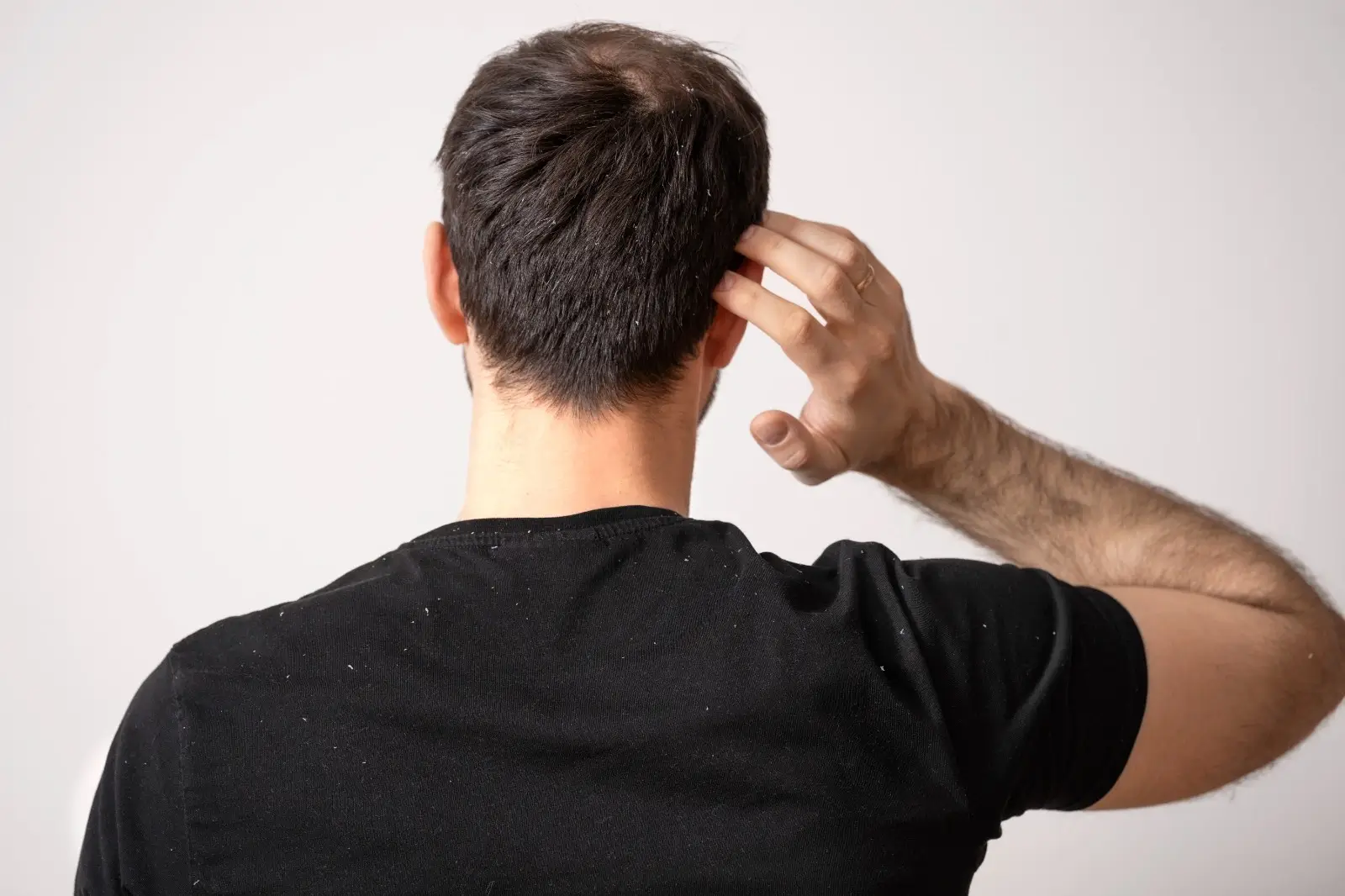
Treatments That Target Different Parts of the Cycle
There is no single treatment that “resets” every follicle. Treatment should be selected according to the diagnosis.
Minoxidil is widely used for pattern hair loss and may help promote entry into anagen, prolong active growth and increase the diameter of some miniaturised hairs. Temporary increased shedding can occur after treatment begins because follicles are changing phases. Results usually require consistent use, and benefits generally diminish after discontinuation.
Finasteride reduces the conversion of testosterone to dihydrotestosterone, or DHT, by inhibiting type II 5-alpha-reductase. It is principally used for male pattern hair loss and can help slow miniaturisation. It is not suitable for everyone and requires discussion of potential adverse effects and pregnancy-related precautions with a qualified clinician.
Other prescription treatments may be considered according to the person’s sex, medical history and diagnosis. These can include dutasteride, spironolactone, corticosteroids or newer immune-targeting medicines for specific forms of alopecia. They should not be treated as interchangeable solutions.
For telogen effluvium, management normally focuses on the trigger: treating thyroid disease, correcting a confirmed deficiency, reviewing medications with a doctor, improving nutrition or allowing recovery after illness or childbirth. Supplements cannot correct every cause of shedding.
Hair transplantation does not alter the underlying cycle of existing non-transplanted follicles. Instead, suitable follicles are redistributed from a donor area to areas of thinning. Transplanted hairs commonly shed temporarily after the procedure before beginning a new growth cycle. Medical treatment may still be recommended to protect susceptible native hair.
Can You Maximise the Anagen Phase?
Genetics place natural limits on anagen duration, so no routine can guarantee permanently prolonged growth. However, several measures can create better conditions for follicles to function normally:
- Eat a balanced diet containing adequate protein, iron, zinc and essential vitamins.
- Avoid severe calorie restriction and rapid, unsupervised weight-loss plans.
- Treat inflammatory, infectious or scaling scalp conditions appropriately.
- Reduce repeated traction from tight braids, extensions, ponytails or headwear.
- Limit excessive bleaching, chemical processing and high-temperature styling.
- Manage chronic health conditions and review possible medication-related shedding with a clinician.
- Use evidence-based hair-loss treatment consistently when medically appropriate.
- Avoid taking high-dose supplements without a clear reason or professional advice.
Cutting or shaving hair does not change anagen duration or make follicles produce thicker strands. These actions affect only the non-living hair shaft above the skin, not the biological activity of the follicle below it.
Nutritional Support and MD Plus Bio Products
The MD Bio PLUS GF Hair Multivitamin contains biotin, iron, zinc, selenium, amino acids and botanical extracts intended to provide nutritional support for normal hair structure and follicular function. It may be useful for adults whose diet does not provide adequate amounts of particular nutrients or when a clinician has identified an increased nutritional need.
However, a supplement should not be presented as a treatment for every form of hair loss or as a way to force follicles into anagen. Correcting a genuine deficiency may support normal growth, but taking additional nutrients when levels are already sufficient does not necessarily produce faster or denser hair. The product should complement—not replace—a balanced diet, medical assessment or prescribed treatment.
People who are pregnant or breastfeeding, have a medical condition, or take regular medication should consult a healthcare professional before use. High-dose biotin can also interfere with certain laboratory tests, including some thyroid and cardiac tests, so users should tell their doctor and laboratory staff that they take it.
When Should You See a Dermatologist?
Professional assessment is advisable if you experience:
- Sudden or rapidly worsening hair loss
- Clearly defined bald patches
- Scalp pain, redness, scaling, pustules or scarring
- Shedding that continues for more than six months
- Loss of eyebrows, eyelashes or body hair
- Hair loss accompanied by fatigue, weight change, menstrual changes or other symptoms
- Progressive thinning at the hairline, temples, part or crown
A dermatologist may examine the scalp with a dermoscopy, perform a hair-pull test and, where appropriate, request blood tests. A scalp biopsy is required only in selected cases. Early diagnosis is particularly important when a scarring alopecia is suspected because permanent follicular damage can occur.