


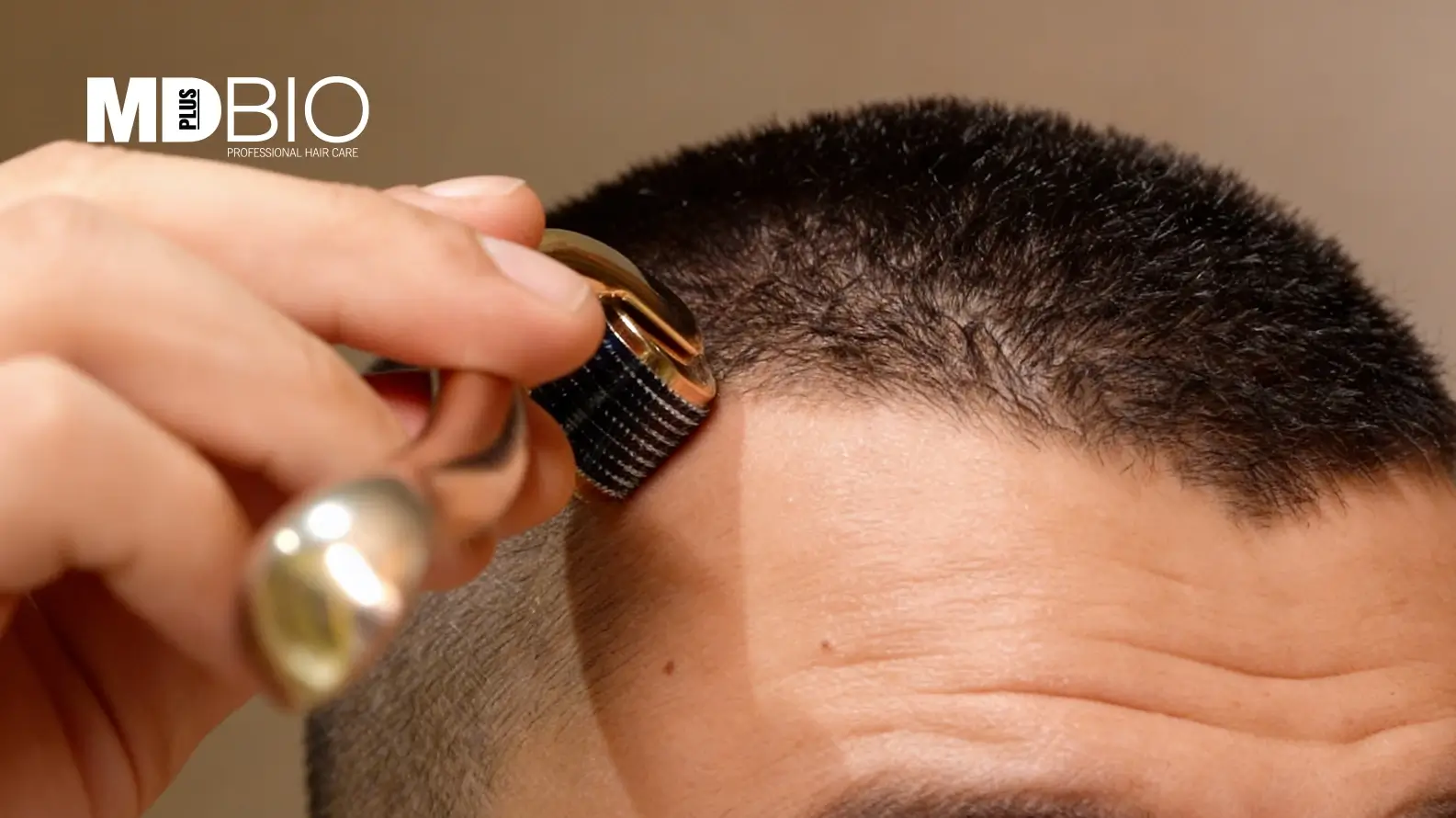
The field of hair restoration has evolved significantly in recent years. Today, patients seek minimally invasive treatments that stimulate natural regrowth before considering surgery. Among these options, microneedling for hair growth has emerged as one of the most scientifically supported methods for improving scalp health and increasing hair density.
By creating controlled micro-injuries in the scalp, microneedling activates regenerative pathways that enhance follicular function. Clinical evidence shows that when combined with appropriate topical treatments, microneedling can significantly increase hair count compared to topical therapy alone.
This guide explains how scalp microneedling works, who it is suitable for, optimal needle sizes, treatment protocols, safety measures, and realistic expectations.
The Science Behind Scalp Microneedling and Hair Regrowth
Microneedling works through a mechanism known as controlled dermal stimulation.
When a dermaroller penetrates the outer layer of the scalp (stratum corneum), it reaches the superficial dermis where hair follicles are anchored. This controlled stimulation triggers:
- Release of platelet-derived growth factors (PDGF)
- Activation of the Wnt/β-catenin signaling pathway
- Increased vascularization (angiogenesis)
- Transition of follicles from telogen (resting phase) to anagen (growth phase)
These biological responses are especially relevant in androgenetic alopecia, where follicles progressively miniaturize.
In addition to cellular activation, microneedling improves the absorption of topical treatments by temporarily increasing scalp permeability — allowing active ingredients to reach the dermal papilla more effectively.
How Microneedling Stimulates Hair Growth at the Cellular Level
The benefits of microneedling extend beyond surface-level stimulation.
During the healing phase, the body initiates:
- Stem cell recruitment
- Collagen and elastin production
- Localized anti-inflammatory signaling
- Improved oxygen delivery through enhanced blood flow
This regenerative cascade strengthens the follicular environment, which may slow miniaturization and improve shaft thickness over time.
When combined with growth-supporting serums containing peptides, biotin, or botanical complexes, the results are typically more pronounced than microneedling alone.
Who Is a Good Candidate for Microneedling?
Microneedling is most effective for:
- Early to moderate androgenetic alopecia (Norwood 2–4)
- Diffuse thinning
- Patients using minoxidil
- Post-hair transplant patients (after full graft stabilization)
- Individuals seeking non-surgical stimulation
It is less effective in advanced baldness (Norwood 6–7), where follicles are no longer viable.
A professional scalp evaluation is recommended before starting any protocol.
Microneedling After a Hair Transplant: When Is It Safe?
After a hair transplant, timing is critical.
Microneedling should not be performed during the first 3–4 months post-surgery. During this period, grafts are stabilizing and vascular integration is still developing.
After month three (with medical clearance), gentle microneedling may:
- Improve blood circulation
- Support angiogenesis around grafts
- Improve scalp elasticity
- Reduce micro-scarring in donor areas
Patients treated at Dr. Serkan Aygin Clinic are typically advised to start with 0.5 mm depth under guidance to support graft maturation safely.
Improper timing or excessive pressure can compromise transplanted follicles, so professional approval is essential.
Structured At-Home Microneedling Support: Hair Complex Meso Serum
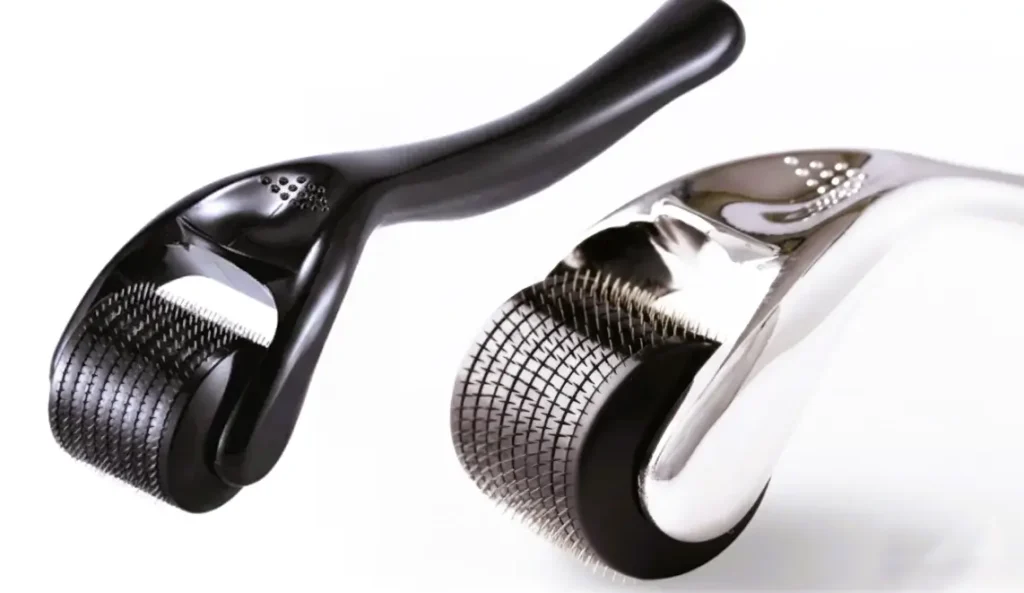
For patients who have completed the initial recovery period, structured at-home microneedling can be safely supported with a pre-formulated mesotherapy solution. The Hair Complex Meso Serum is designed specifically for scalp regeneration and is delivered with a calibrated dermaroller to ensure consistent depth and safe application.
Unlike standard cosmetic serums, mesotherapy formulations contain concentrated bioactive compounds such as biotin, peptides, and follicular growth stimulators intended to support dermal papilla activation. When applied immediately after controlled microneedling, these ingredients reach the targeted follicular zone more effectively.
This integrated system allows patients to continue follicular stimulation at home after the medically recommended resting period, reinforcing graft maturation or supporting early-stage thinning under professional guidance.
Choosing the Right Dermaroller Size
Needle length directly determines treatment depth and intensity.
Needle Length | Primary Purpose | Frequency |
0.25 mm | Enhance product absorption | Every other day |
0.50 mm | Mild stimulation & collagen support | 2–3x per week |
1.00 mm | Follicle activation | Once per week |
1.50 mm | Deep remodeling (professional use only) | Every 2 weeks |
For at-home use, 0.5–1.0 mm is generally considered the safest and most effective range.
The goal is mild redness — not bleeding. Excessive trauma increases inflammation without improving results.
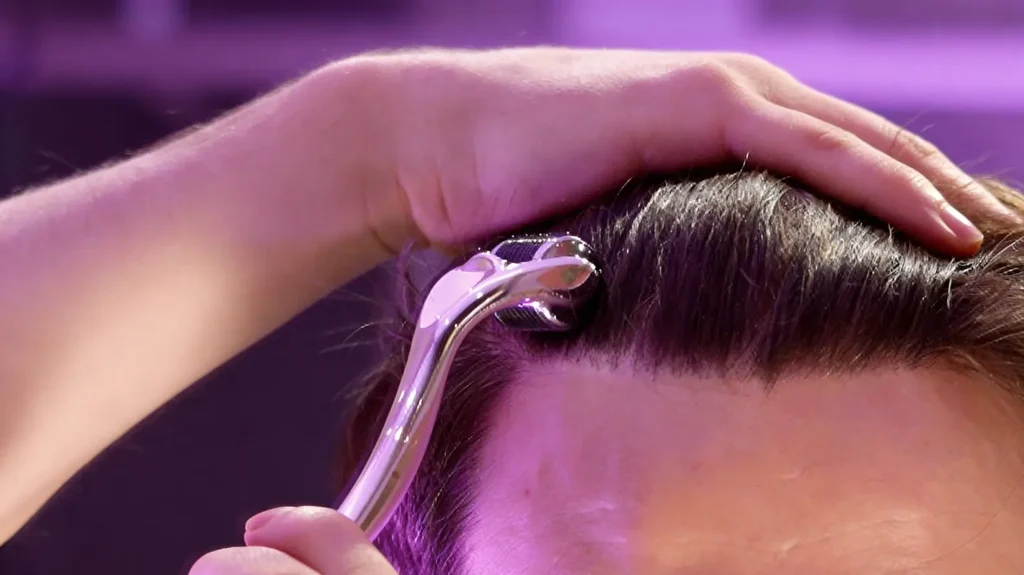
Step-by-Step At-Home Microneedling Protocol
Consistency and hygiene are critical.
Step 1: Cleanse
Wash your scalp thoroughly to remove oils and styling residue.
Step 2: Sanitize
Soak the dermaroller in 70% isopropyl alcohol for 5–10 minutes.
Step 3: Section the Scalp
Divide into front, crown, and sides.
Step 4: Roll in Four Directions
Roll horizontally, vertically, and diagonally over thinning areas using light-to-moderate pressure.
Step 5: Apply Topical Treatment
Immediately apply a growth-supporting serum while micro-channels are open.
Step 6: Avoid Washing for 4–6 Hours
Allow natural closure of micro-channels and ingredient absorption.
Microneedling vs Minoxidil: Which Is Better?
This is a common question.
- Minoxidil improves blood flow and prolongs the anagen phase.
- Microneedling activates regenerative pathways and enhances topical absorption.
Clinical studies suggest that combining both produces superior results compared to either treatment alone.
Microneedling acts as a biological amplifier for topical therapies.
Safety Guidelines and Sterilization
To prevent irritation or infection:
- Never share your dermaroller.
- Avoid areas with psoriasis, dermatitis, or open wounds.
- Replace your device every 2–3 months.
- Do not apply harsh products immediately after treatment.
- Stop if redness persists beyond 24–48 hours.
Dull needles can tear skin instead of creating clean channels, increasing inflammation risk.
When Will You See Results?
Hair growth is biologically slow.
Weeks 1–4:
Reduced shedding and improved scalp texture.
Months 2–3:
Appearance of fine vellus hairs.
Months 4–6:
Increased thickness and improved density.
Months 6–9:
Peak visible improvement for most users.
Consistency is key. Microneedling works best when maintained as part of a long-term scalp health strategy.