


When it comes to treating hair loss, two names frequently come up in expert discussions and patient searches: Capixyl and Minoxidil. One is a modern, plant-derived peptide complex designed to target the hormonal causes of hair loss. The other is a long-established, FDA-approved topical medication known worldwide for stimulating regrowth.
Both are widely used for hair thinning and androgenic alopecia, but they work in very different ways. So when comparing Capixyl vs Minoxidil for hair growth, which option truly works better — and which one is right for you?
In this guide, we’ll compare Capixyl and Minoxidil in terms of mechanism of action, effectiveness, side effects, safety, cost, and long-term use, helping you make an informed, expert-backed decision.
What Is Capixyl and How Does It Work?
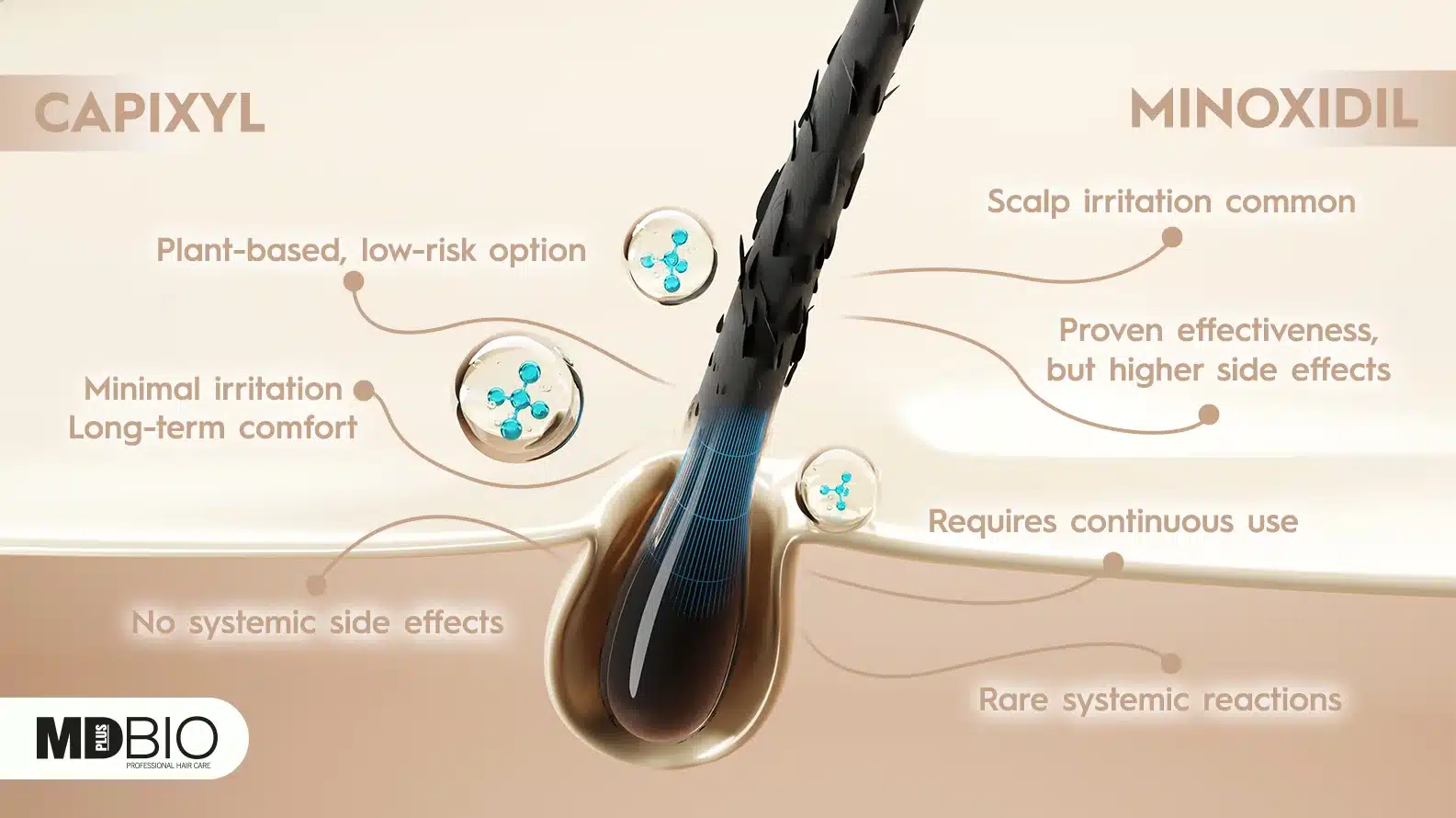
Capixyl is a newer, clinically studied ingredient used in advanced hair-care formulations. Rather than acting as a drug, it is a biomimetic complex composed of Acetyl Tetrapeptide-3 and Red Clover Extract, which is rich in Biochanin A, a naturally occurring DHT inhibitor.
How Capixyl Supports Hair Growth
Capixyl works by addressing several underlying causes of hair thinning:
- DHT Regulation: Biochanin A helps limit the conversion of testosterone into dihydrotestosterone (DHT), the primary hormone responsible for follicle miniaturization in androgenic alopecia.
- Follicle Protection: By reducing DHT activity at the scalp level, Capixyl helps protect follicles from progressive thinning.
- Improved Follicle Anchoring: The peptide component strengthens the extracellular matrix around the follicle, improving hair anchorage and resilience.
- Anti-Inflammatory Action: Capixyl helps calm scalp inflammation, creating a healthier environment for long-term hair growth.
Clinical Evidence and Use
Clinical studies indicate that consistent use of Capixyl can:
- Reduce hair shedding
- Improve hair density
- Support scalp health
Because Capixyl is non-hormonal and plant-derived, it is generally well tolerated and considered suitable for long-term daily use, even for individuals with sensitive scalps.
Capixyl is commonly found in clinical-grade hair serums, including MD Plus Bio Repair Serum, and is often chosen by patients seeking a gentle yet science-based approach to hair loss management.
Understanding Minoxidil and Its Benefits
Minoxidil is one of the most widely studied hair loss treatments in the world. Originally developed as an oral medication for hypertension, researchers observed increased hair growth as a side effect, leading to the development of topical Minoxidil for hair loss.
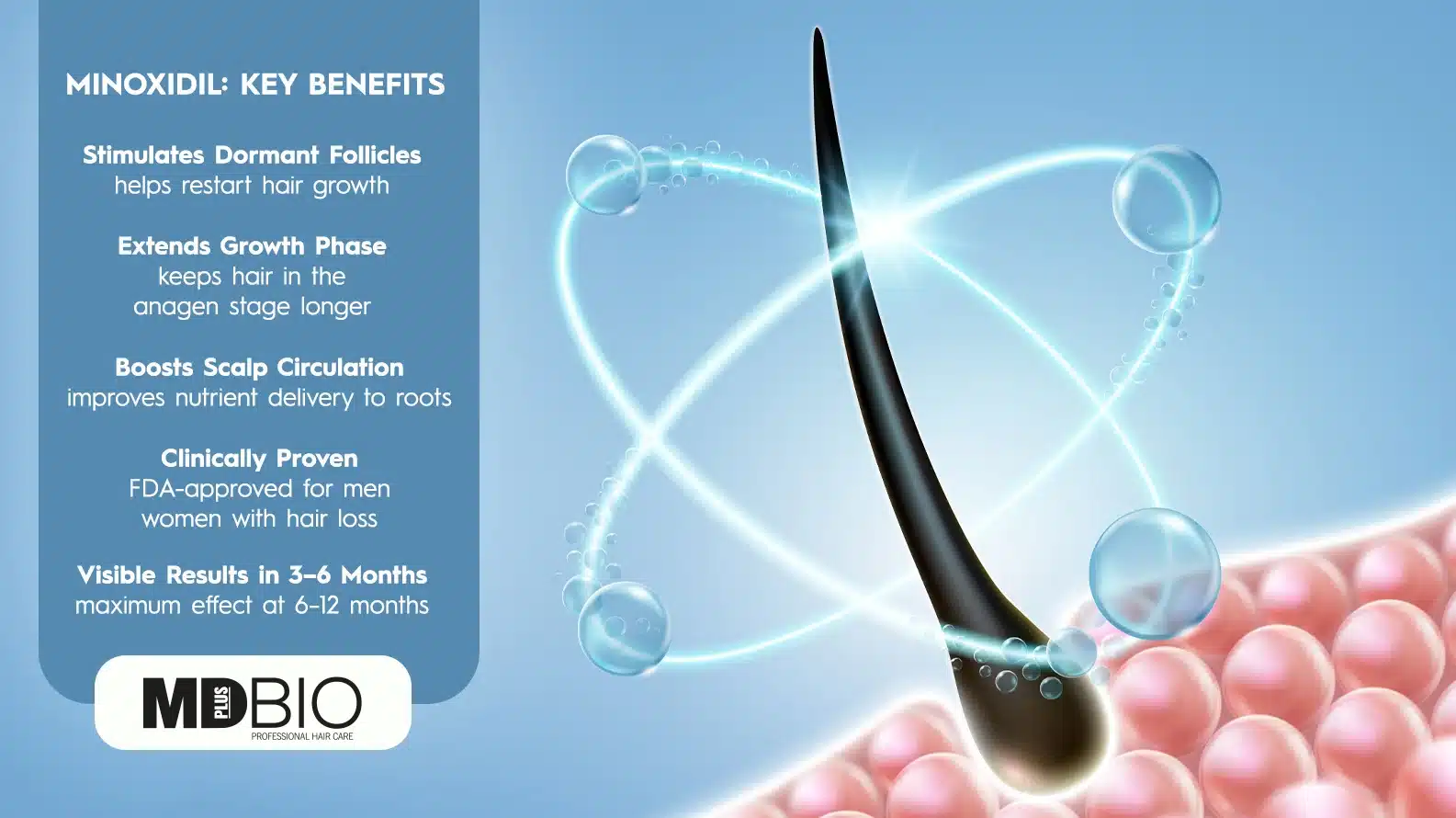
Today, it remains the only FDA-approved over-the-counter topical treatment for androgenic alopecia in both men and women.
How Minoxidil Works
Minoxidil promotes hair growth through several mechanisms:
- Vasodilation: It widens blood vessels in the scalp, improving oxygen and nutrient delivery to hair follicles.
- Growth Phase Extension: Minoxidil prolongs the anagen (growth) phase of the hair cycle.
- Follicle Reactivation: It can stimulate dormant follicles to re-enter the growth phase, leading to visible regrowth.
Proven Results
- Clinically proven to slow hair loss and stimulate regrowth, especially on the crown and vertex
- Available in 2% and 5% topical solutions and foams
- Initial results often appear after 3–4 months, with optimal results around 6–12 months
However, Minoxidil works only as long as it is used consistently. Discontinuation typically results in renewed hair loss.
Capixyl vs Minoxidil: Direct Comparison
The table below summarizes the key differences between Capixyl vs Minoxidil to help clarify which treatment may be more suitable for your needs.
Feature | Capixyl | Minoxidil |
Primary Action | DHT reduction + follicle strengthening | Increased blood flow + growth phase extension |
Main Benefit | Reduces shedding, protects follicles | Stimulates visible regrowth |
Time to Notice Results | ~3–4 months | ~3–6 months |
Best For | Early thinning, sensitive scalps, long-term use | Androgenic alopecia, crown/vertex thinning |
Clinical Status | Backed by dermatological studies | FDA-approved, gold standard |
Side Effects | Rare, usually mild | Irritation, shedding, possible systemic effects |
Long-Term Use | No dependency | Continuous use required |
Stopping Treatment | No rebound shedding | Hair loss resumes |
Side Effects and Safety Profile
Capixyl Safety
Capixyl is generally considered very safe. Reported side effects are uncommon and mild:
- Occasional scalp sensitivity or redness
- Temporary tingling in rare cases
- No known systemic side effects
- No withdrawal or rebound shedding
Clinical evaluations consistently describe Capixyl as well tolerated.
Minoxidil Safety
Minoxidil is effective but has a broader side-effect profile:
- Common: itching, dryness, flaking, redness
- Expected: initial shedding during the first weeks
- Less common: contact dermatitis
- Rare systemic effects: dizziness, increased heart rate, fluid retention
- Dependency: hair regrowth is maintained only with continuous use
Cost Analysis: Which Offers Better Value?
Capixyl
Capixyl is typically found in premium cosmeceutical formulations rather than generic drugs.
- Higher upfront cost
- No medical supervision required
- Suitable for indefinite use
- Value lies in safety, comfort, and sustainability
Minoxidil
- Widely available and affordable initially
- Requires lifelong use
- Long-term costs accumulate over time
- Some users need stronger concentrations or branded versions
Cost vs Value Summary:
Capixyl prioritizes long-term scalp health and tolerance, while Minoxidil offers stronger short-term regrowth at a lower initial cost.
Which Treatment Is Right for You?
Choose Capixyl if you:
- Have early-stage hair thinning
- Have a sensitive scalp
- Want a gentle, long-term solution
- Prefer a non-drug approach
Choose Minoxidil if you:
- Have androgenic alopecia
- Want stronger regrowth potential
- Are comfortable with continuous use
- Tolerate topical medications well
In many cases, specialists may recommend a combination approach, using Minoxidil for regrowth and Capixyl to support follicle health and reduce DHT-related damage.