


Panthenol is a common ingredient in shampoos, conditioners and scalp serums, where it may also appear as provitamin B5 or dexpanthenol. Its main role is not to stimulate new hair growth, but to help the hair fibre and the surface of the scalp retain moisture.
Well-conditioned hair may feel softer, break less during brushing and appear fuller or smoother. However, improving the look and feel of existing hair is very different from treating the underlying cause of hair loss.
This guide explains the most realistic panthenol benefits for hair, including conditioning, scalp hydration, cosmetic volume, product concentration and what people with fine or thinning hair can reasonably expect.
What Is Panthenol?
Panthenol is the alcohol analogue of pantothenic acid, an essential water-soluble nutrient more commonly known as vitamin B5.
In living tissue, dexpanthenol can be converted into pantothenic acid. Pantothenic acid forms part of coenzyme A and is involved in fatty-acid metabolism and many other cellular processes.[1,2]
In cosmetic formulations, panthenol attracts and retains water. This is why it is commonly classified as a humectant and conditioning ingredient for both skin and hair.[3]
The term “provitamin B5” refers to its relationship with vitamin B5. It does not mean that applying a panthenol shampoo produces the same systemic effects as obtaining vitamin B5 through the diet.
Panthenol vs Pantothenic Acid: What Is the Difference?
Although the two terms are sometimes used interchangeably in beauty marketing, panthenol and pantothenic acid are not the same substance.
Feature | Panthenol | Pantothenic acid |
What it is | Alcohol analogue and precursor of vitamin B5 | Vitamin B5 itself |
Common cosmetic role | Humectant and conditioner for skin and hair | Less commonly used as a cosmetic conditioning ingredient |
Behaviour in topical products | Stable and capable of penetrating superficial skin layers when appropriately formulated | Essential nutrient involved in coenzyme A formation after absorption into the body |
Realistic expectation for hair | May improve the feel, flexibility and appearance of existing hair fibres | Adequate intake prevents deficiency, but extra vitamin B5 has not been shown to regrow hair in people who are not deficient |
Pantothenic acid is found in a wide range of foods, and deficiency is uncommon outside severe malnutrition or unusual medical circumstances.[1]
Taking additional vitamin B5 is not an evidence-based treatment for common hereditary hair loss when no deficiency is present.
How Does Panthenol Work on the Hair Fibre?
The hair shaft is a non-living keratin fibre. It cannot biologically “heal” in the same way living skin can, but cosmetic ingredients can temporarily alter its moisture content, flexibility, friction and appearance.
Laboratory and cosmetic-science research suggests that water-soluble panthenol can deposit on the surface of the hair and penetrate at least the outer layers of the fibre.
By interacting with water and polar sites within hair proteins, panthenol may make the strand feel more flexible and reduce some of the roughness associated with a weathered or damaged cuticle.
How much it penetrates depends on several factors, including the complete formulation, contact time, concentration and condition of the hair.
Chemically treated hair is usually more porous, while a rinse-off shampoo remains in contact with the hair for far less time than a leave-in serum or treatment.
It is also important to recognise that much of the available evidence comes from laboratory testing on hair fibres rather than large clinical trials involving people with thinning hair.
Does Panthenol Make Individual Hair Strands Thicker?
Panthenol may temporarily make hair feel fuller by increasing moisture and leaving a light conditioning deposit on the strand.
This can improve the perception of body and thickness, particularly in fine or dry hair. However, this is a cosmetic effect.
Panthenol does not enlarge the hair follicle or increase the biological density of hair.
In androgenetic alopecia, follicles gradually become smaller through a process called miniaturisation, producing increasingly fine hairs. Panthenol may improve how those strands look and feel, but it has not been shown to reverse follicular miniaturisation.
Panthenol Benefits for Hair: What Does the Evidence Support?
Panthenol is sometimes described as an intensive or “super” moisturising ingredient. While the language may be promotional, its ability to attract and retain water is well established in cosmetic science.
The strongest evidence relates to conditioning and hydration rather than hair growth.
Potential benefit | How it may work | Evidence and limitations |
Softer, more flexible hair | Attracts water and interacts with the hair fibre | Established cosmetic function; results depend on the full formulation |
Smoother surface and easier combing | Conditions the cuticle and may reduce friction | Supported by cosmetic fibre testing; not the same as permanent repair |
Fuller-looking hair | Moisture and light deposition may add temporary body | Cosmetic effect only; does not increase follicle density |
Less breakage during grooming | Greater flexibility may reduce mechanical stress | Plausible for fragile hair, but panthenol-specific human clinical evidence is limited |
Better scalp hydration and comfort | Humectant action helps retain water in the outer skin layer | Dexpanthenol has supporting evidence for skin hydration and barrier function, but scalp-specific studies are limited[2,4] |
Reduced signs of irritation | Barrier support may reduce redness after an irritant challenge | Demonstrated in skin studies; does not prove effectiveness against dandruff, eczema or other scalp disorders[4] |
Hair regrowth | No established mechanism or adequate clinical evidence | Not supported as a stand-alone treatment for alopecia |
Moisture Without Necessarily Weighing Hair Down
Because panthenol is water-soluble, it can provide conditioning without automatically creating a greasy or oily coating.
Whether a product feels light or heavy depends on the full formula, not panthenol alone.
Greater flexibility may help reduce breakage caused by brushing and styling. This can be particularly useful when breakage is making the hair look thinner or preventing it from retaining length.
However, panthenol cannot prevent hair shedding that begins at the follicle.

Smoother Hair, Shine and Easier Styling
By improving hydration and reducing friction, a panthenol-containing formula may support shine, detangling and general manageability.
These effects are temporary and gradually diminish as the product is washed away.
When cosmetic products use terms such as “repair”, this should generally be understood as temporary conditioning and improvement of the hair surface rather than permanent biological reconstruction of the strand.
Scalp Hydration and Soothing Potential
Research on the skin suggests that topical dexpanthenol can improve hydration of the outer skin layer and support recovery of the skin barrier.
In a controlled irritation model, a dexpanthenol-containing cream helped accelerate barrier recovery and reduced redness compared with the vehicle formulation.[4]
Scientific reviews have also described beneficial effects on dry or irritated skin, although results depend strongly on the complete formulation.[2,5]
These properties may be useful for a scalp that feels dry, tight or uncomfortable.
However, high-quality trials conducted specifically on the scalp remain limited.
Panthenol may support scalp comfort when included in a gentle formulation, but it is not an anti-inflammatory medicine and should not replace appropriate treatment for conditions such as seborrhoeic dermatitis, psoriasis, contact dermatitis or scalp infections.

Is Panthenol Good for Fine or Thinning Hair?
For hair that is already present, a well-formulated panthenol product may improve softness, reduce tangling and give fine or damaged strands more body.
This can make the hair appear healthier and somewhat fuller.
What panthenol should not be expected to do is regrow lost hair, stop androgenetic alopecia, reactivate inactive follicles or increase the number of hairs per square centimetre.
There are currently no robust human clinical trials demonstrating that topical panthenol alone treats common forms of alopecia.
Persistent shedding, a widening part, a receding hairline, patchy hair loss, scalp pain, scaling or scarring should be professionally assessed.
Possible causes include hereditary hair loss, telogen effluvium, nutritional deficiencies, thyroid disorders, medication effects and inflammatory scalp conditions.
What Is the Best Panthenol Concentration for Hair Products?
There is no clinically established “best” percentage of panthenol for hair.
Historical cosmetic-use data report concentrations above 0.1% and up to around 1% in many products, while later industry data have reported concentrations of up to 5% in some hair conditioners.[3]
These figures describe cosmetic use and safety conditions. They do not prove that a 5% formula works better than a 1% formula.
The delivery system and complete formulation are just as important as the percentage on the label.
- Shampoo is rinsed away relatively quickly, so the cleansing base and overall mildness of the formula play a major role.
- Conditioner remains on the hair for longer and can combine panthenol with other ingredients that reduce friction.
- Leave-in products provide longer contact but may cause build-up if too much is applied.
- Scalp serum performance depends on the vehicle, other active or conditioning ingredients and individual tolerance.
Brands do not always disclose the exact percentage of every ingredient.
For this reason, it is generally more useful to look at the full ingredient list, product instructions and whether the formulation suits your hair and scalp.
A higher percentage does not automatically mean a better product.
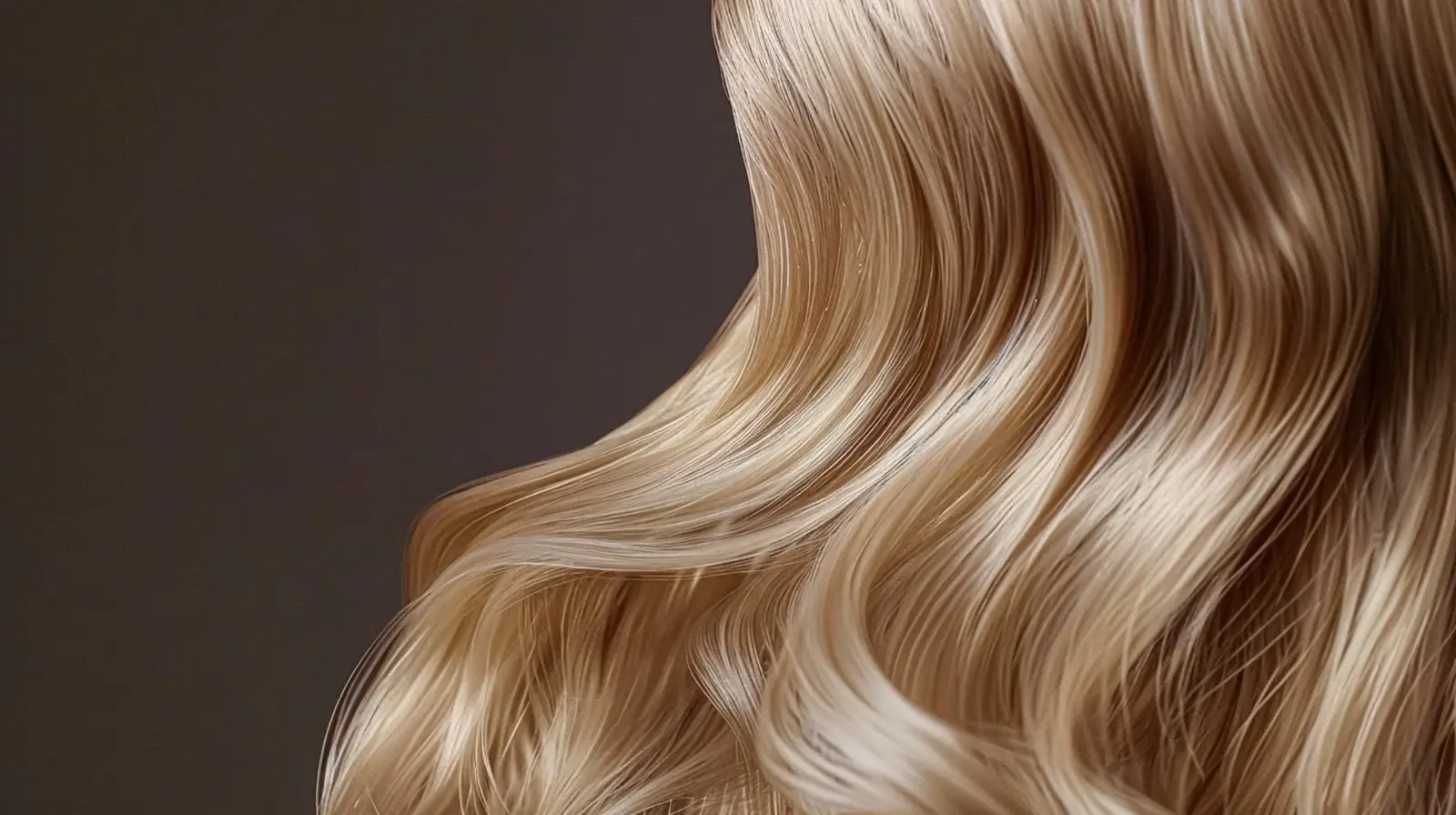
Panthenol in MD Plus Bio Hair Care
MD Plus Bio hair-care formulations use panthenol as part of a broader cosmetic approach to hair and scalp care.
In the Hair Repair Shampoo, panthenol is combined with ingredients including aloe vera, beta-glucan, hydrolysed keratin and collagen, piroctone olamine, biotin, amino acids and botanical extracts.
Within this type of formula, panthenol primarily contributes moisture retention, conditioning and scalp comfort.
The shampoo may complement a routine for dry, fragile or fine-feeling hair by supporting softness, manageability and the cosmetic condition of the hair fibre.
It should not be considered equivalent to a medicine or a medical treatment for alopecia.
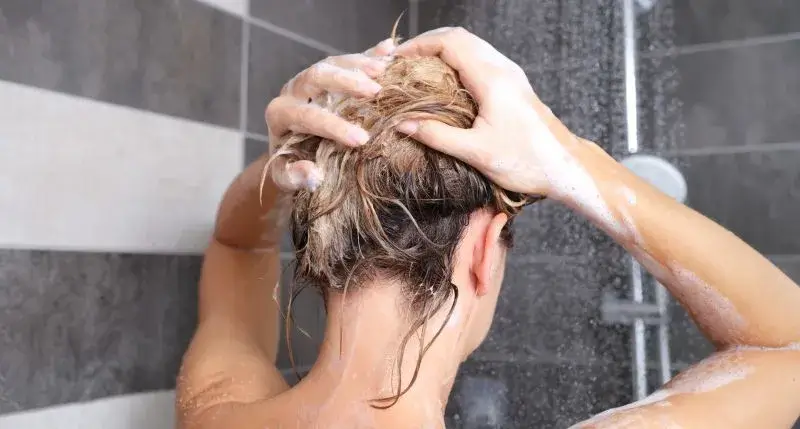
The product instructions indicate applying it to wet hair, massaging gently, rinsing and repeating the application, allowing the second application to remain on the hair for at least five minutes.
It is intended for external use only and should be discontinued if irritation develops.
How to Add Panthenol to Your Hair-Care Routine
The most appropriate product type should be chosen according to your specific needs. A mild shampoo may be suitable for routine cleansing, while a conditioner is generally more useful for tangling, roughness and damaged lengths. A leave-in treatment provides longer contact with the hair, and a scalp serum may be helpful for dryness as long as it does not cause irritation or make the roots feel heavy.
It is important to follow the quantity and frequency recommended on the product label. Using several panthenol-containing products at the same time is rarely necessary. If the hair begins to feel coated, flat or heavy, the amount of leave-in product can be reduced or concentrated mainly on the mid-lengths and ends. People with very fine hair may find it preferable to begin with a small amount and adjust according to how the hair responds.
Safety and When to Seek Professional Advice
The Cosmetic Ingredient Review Expert Panel concluded that panthenol and the related ingredients assessed were safe under the reported conditions of cosmetic use.[3] However, a finished formula may also contain fragrance, preservatives, surfactants, botanical extracts and other ingredients that may not be suitable for everyone.
People with sensitive or reactive skin may consider patch-testing a new leave-in product on a small area before regular use. If burning, persistent itching, swelling, a spreading rash or worsening scaling occurs, use of the product should be discontinued. Contact with the eyes should be avoided, and cosmetic products should not be applied to open, infected or weeping skin unless advised by a healthcare professional.
At normal cosmetic exposure levels, topical panthenol does not carry a specific general warning for pregnancy or breastfeeding. However, people who are pregnant, breastfeeding or being treated for a medical scalp condition may wish to ask a healthcare professional to assess the complete formulation. Children should only use products that are appropriate for their age and according to the directions provided on the label.
After a hair transplant, the washing and product schedule provided by the transplant clinic should be followed carefully. Newly implanted grafts and healing donor skin should not be exposed to an unapproved product simply because it contains a moisturising or soothing ingredient. The timing of application, the amount of pressure used and the complete formulation of the product are all important during the healing period.
A dermatologist, doctor or other qualified healthcare professional should be consulted if hair loss is sudden, patchy, painful, associated with inflammation or scarring, or continues for several months. Cosmetic scalp care and medical treatment serve different purposes and should not be considered interchangeable.
Cosmetic hair care and medical hair-loss treatment have different purposes.
Conclusion
The best-supported panthenol benefits for hair are practical and cosmetic.
Panthenol can help improve moisture, softness, flexibility, smoothness and manageability. Research on the skin also supports the role of dexpanthenol in hydration and barrier recovery, although direct evidence relating specifically to the scalp remains more limited.
For fine or thinning hair, panthenol may help existing strands look healthier and resist some grooming-related breakage.
This should not be confused with stimulating new follicles, increasing true hair density or treating alopecia.
When choosing a product, look at the complete formulation rather than panthenol in isolation, and seek medical advice if hair loss is persistent, sudden or accompanied by scalp symptoms.
Discover MD Plus Bio Hair Care
Explore MD Plus Bio Hair Repair Shampoo and other MD Plus Bio products developed for the cosmetic care of the hair and scalp.
If hair loss or scalp symptoms continue, consult a dermatologist or another qualified healthcare professional.