


Calendula is best known for its bright orange and yellow flowers, but it also has a long history in topical skin care. Extracts from Calendula officinalis, often called pot marigold, are used in creams, oils, lotions and scalp products designed to calm dryness and discomfort. This has led to growing interest in calendula extract for hair and scalp routines, particularly among people looking for a gentle botanical ingredient.
The most important point is that calendula is primarily a scalp-conditioning and soothing ingredient, not a clinically established hair-growth treatment. Laboratory, animal and limited human research suggests anti-inflammatory, antioxidant and tissue-supporting activity, but direct clinical trials involving scalp conditions or hair growth are scarce. Its role is therefore supportive: a comfortable, well-conditioned scalp may provide a better environment for normal hair care, but calendula cannot reverse genetic hair loss or replace medical treatment.
What Is Calendula Extract?
Calendula officinalis belongs to the Asteraceae family. It should not be confused with ornamental marigolds from the Tagetes genus, although both may be called “marigold” in everyday language. Cosmetic calendula extracts are generally prepared from the flower and may appear on an ingredient list under names such as Calendula Officinalis Flower Extract or Calendula Officinalis Flower Oil.
Calendula flowers contain several groups of bioactive compounds, including triterpenoids, flavonoids, carotenoids and phenolic compounds. These substances have demonstrated anti-inflammatory and antioxidant activity in experimental research. The final composition of an extract, however, depends on the plant material, extraction method, solvent, concentration and finished formulation. A homemade infusion and a professionally formulated scalp lotion are not chemically or functionally identical.
European Medicines Agency guidance recognises the traditional use of calendula flower preparations for minor skin inflammation and as an aid in the healing of minor wounds. This supports its history as a topical skin-soothing botanical, but it does not prove that every calendula cosmetic treats scalp disease.
Potential Benefits of Calendula for Scalp Health
|
Potential role |
How it may help |
Strength of evidence for the scalp |
|
Soothing support |
May help reduce the sensation or appearance of mild irritation associated with dryness |
Plausible, but direct scalp trials are limited |
|
Anti-inflammatory activity |
Plant compounds may influence inflammatory signalling pathways |
Supported mainly by laboratory, animal and non-scalp skin research |
|
Antioxidant support |
Flavonoids and carotenoids may help counter oxidative stress at the skin surface |
Mechanistic evidence; clinical significance on the scalp is uncertain |
|
Moisture and barrier support |
In a well-formulated lotion or conditioner, calendula can complement humectants and emollients |
Benefit depends heavily on the complete formula |
|
Hair growth |
No reliable evidence that topical calendula regrows hair or treats androgenetic alopecia |
Insufficient evidence |

Anti-Inflammatory Action on the Scalp
Inflammation is a normal biological response, but persistent inflammation can be associated with itching, redness, tenderness and disruption of the skin barrier. Calendula’s triterpenoids and flavonoids have shown anti-inflammatory effects in preclinical studies. Research on skin models also suggests that calendula extracts may modulate mediators involved in inflammatory responses.
For scalp care, this means calendula may be useful as one component of a gentle formula intended for mild dryness or sensitivity. It does not mean calendula should be used to self-treat persistent seborrhoeic dermatitis, scalp psoriasis, folliculitis or allergic contact dermatitis. These conditions have different causes and may require antifungal, keratolytic, corticosteroid or other clinician-directed treatment.
Soothing Irritated and Sensitive Scalps
A sensitive scalp may present with itching, burning, tingling, tightness or tenderness, sometimes without obvious visible changes. Harsh cleansing, fragrance, frequent heat styling, dry weather, product build-up and an impaired skin barrier can all contribute. Choosing a mild cleanser and avoiding known triggers is often more important than relying on any single botanical.
Calendula may complement this type of routine, especially when it appears alongside ingredients such as panthenol, aloe vera, beta-glucan, allantoin or shea butter. These combinations can help condition the scalp and reduce moisture loss. The vehicle matters: a balanced lotion or wash-off formula is generally more predictable than applying undiluted essential oils or homemade extracts.
People with an acutely inflamed, broken, infected or recently treated scalp should seek professional advice before applying new products. After a hair transplant or another scalp procedure, follow the clinic’s timing and product instructions; “natural” does not automatically mean appropriate for fresh grafts or healing skin.
Calendula vs Other Natural Scalp Extracts
Calendula is one of several botanicals used in scalp formulations. They are not interchangeable, and evidence varies considerably.
|
Ingredient |
Common scalp-care role |
Important distinction |
|
Calendula |
Soothing, conditioning and antioxidant support |
Direct evidence for hair growth is insufficient |
|
Aloe vera |
Hydration and cooling skin feel |
Evidence depends on condition and formulation |
|
Chamomile |
Soothing and antioxidant support |
Also belongs to the Asteraceae family and may trigger allergy in susceptible users |
|
Centella asiatica |
Skin-barrier and tissue-support claims |
Most evidence relates to skin, not hair regrowth |
|
Green tea |
Antioxidant activity |
Early research does not establish it as a stand-alone hair-loss treatment |
|
Rosemary oil |
Popular for scalp and hair-growth claims |
Essential oils may irritate and require proper dilution; evidence remains limited |
Calendula’s main advantage is its suitability for formulas focused on comfort rather than stimulation. Unlike a cooling essential oil, it does not need to produce tingling to feel active. Tingling is not proof that a product works and, on a reactive scalp, may indicate irritation.
Best Ways to Apply Calendula to the Scalp
The appropriate method depends on the product type and the scalp’s condition.
- A rinse-off shampoo
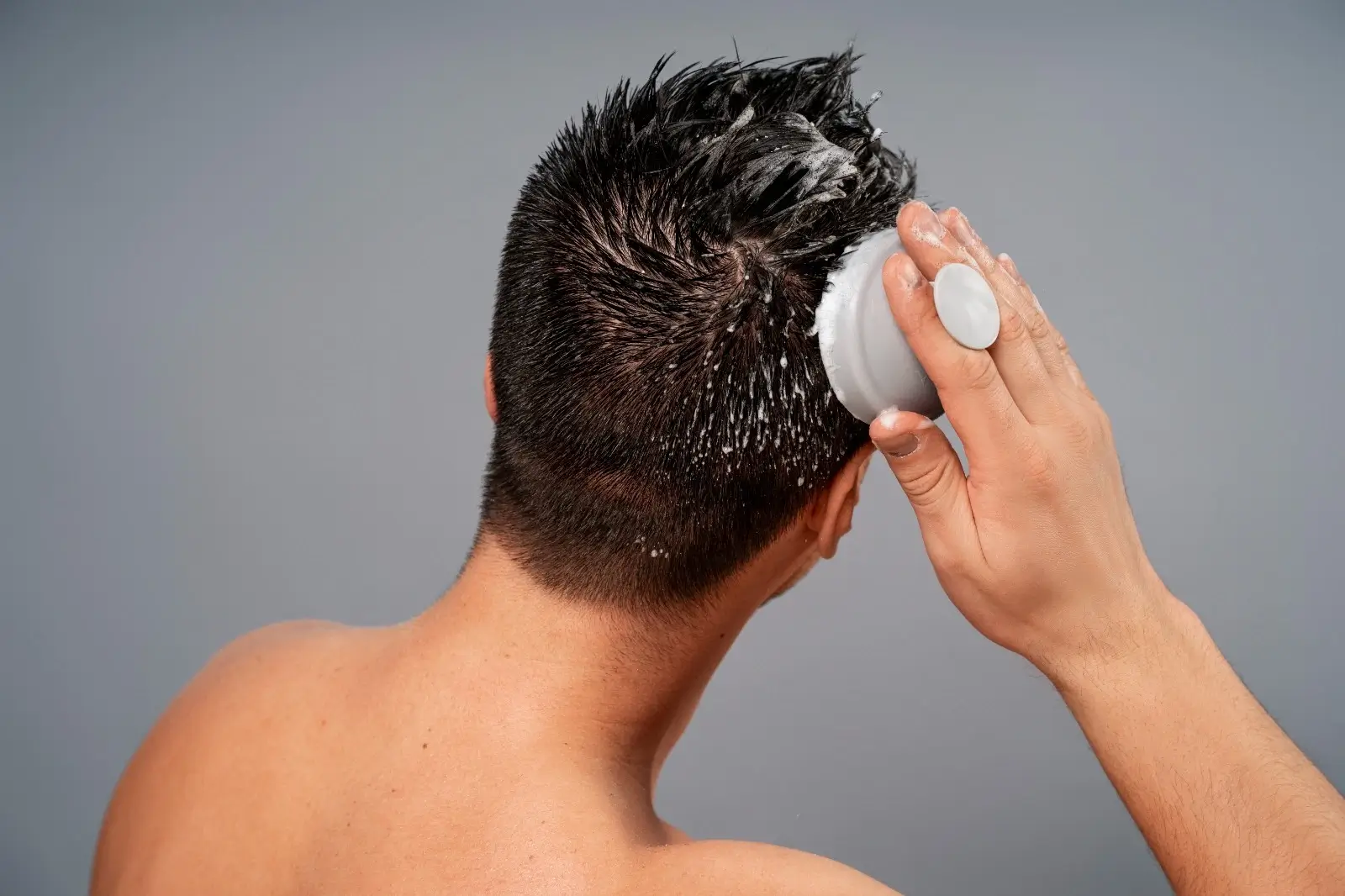
A shampoo containing calendula can introduce the extract during cleansing while limiting contact time. Apply mainly to the scalp, massage gently with the fingertips and rinse thoroughly. Avoid scratching with the nails. A rinse-off format may suit people who prefer a simple routine or who find leave-on products too heavy.
- A leave-on scalp lotion or serum
A professionally formulated lotion provides longer contact with the skin and may be more helpful for dryness or tightness. Follow the labelled amount and frequency. More product is not necessarily better; over-application can cause residue or make it harder to identify the cause if irritation develops.
- A pre-shampoo oil
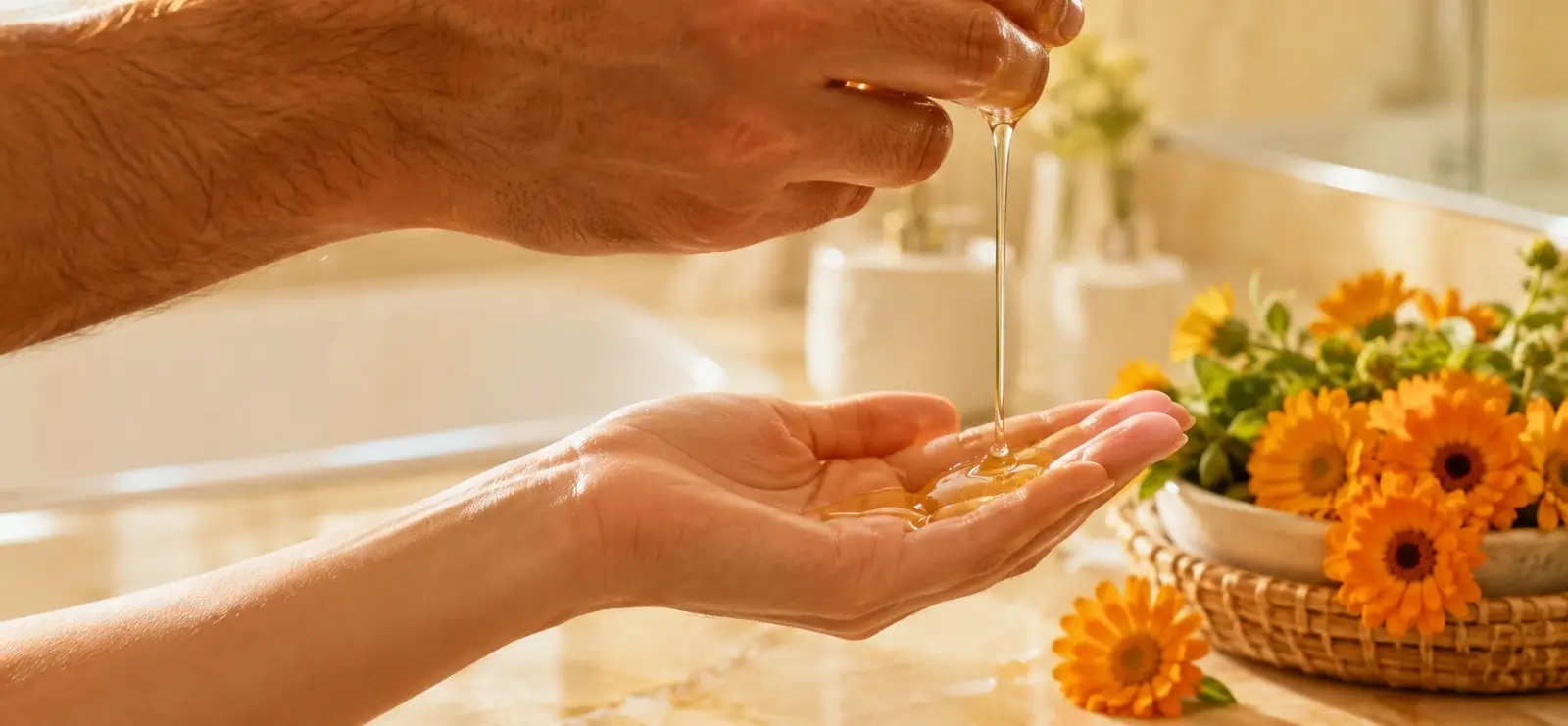
Calendula-infused carrier oil may soften dry surface scale, but oils can feel occlusive and may not suit an oily scalp. Do not apply essential oil directly, and avoid unverified homemade preparations on broken skin. If dandruff is persistent, oily or accompanied by redness, a medicated approach may be more appropriate.
- Patch testing first
Apply a small amount of the finished product to a limited area as directed by the manufacturer and observe for delayed redness, itching or swelling. Patch testing at home cannot rule out every allergy, but it may identify obvious sensitivity before broader use. Stop using the product if a reaction occurs.
Choosing a Calendula Scalp Product
Look beyond the botanical name on the front label. A useful product should provide a full ingredient list, clear directions and realistic claims. Consider the entire formulation, including fragrance, surfactants, preservatives and other plant extracts. A product marketed as “natural” can still cause irritation or allergy.
For a sensitive scalp, a mild, pH-appropriate cleanser and a non-irritating leave-on formula may be preferable. Avoid assuming that a high calendula concentration is automatically superior: extract quality, delivery system and overall tolerability matter more than an isolated marketing percentage.
MD Plus Bio Products Containing Calendula
The MD Plus Bio Hair Repair Shampoo and Lotion Set lists calendula among a blend that also includes panthenol, aloe vera, allantoin, centella asiatica, chamomile, beta-glucan, hydrolysed collagen, shea butter and other botanical extracts. According to the product information, the set is designed to provide soothing, nourishing and moisture-retaining support, including leave-on care for a dry or sensitive scalp.
This combination may be beneficial for adults whose scalp feels dry, tight or mildly uncomfortable after cleansing, or for those seeking a gentle conditioning step within a broader hair-care routine. Use it according to the package directions. Anyone with a diagnosed scalp disorder, known botanical allergy or recent scalp procedure should ask a dermatologist or treating clinician when it is safe to start. The set should not be presented as a treatment for alopecia, infection, psoriasis or seborrhoeic dermatitis, and results will depend on the complete formula and individual tolerance.
Safety, Allergies and When to Seek Medical Advice
Calendula-derived cosmetic ingredients have been assessed as safe under reported cosmetic conditions of use, but no botanical is risk-free. Calendula belongs to the Asteraceae, or daisy, family. People who react to plants such as ragweed, chrysanthemum, chamomile or related species may have a greater risk of contact allergy. Reported reactions are uncommon, but can include redness, itching, eczema or swelling.
Stop use and seek advice if symptoms worsen. A medical assessment is appropriate for intense itching, pain, pus, crusting, bleeding, sharply defined plaques, sudden patchy hair loss or symptoms that continue despite gentle care. These findings can indicate infection, inflammatory disease or another condition that a cosmetic product cannot diagnose or treat.
Can Calendula Improve Hair Growth?
There is currently no strong clinical evidence that calendula extract stimulates meaningful hair regrowth in people. Claims that it “activates follicles” or treats pattern hair loss go beyond the available data. Androgenetic alopecia is influenced by genetics and androgen signalling, while other types of shedding may relate to illness, stress, nutrition, medication, autoimmune disease or hormonal changes.
Calendula’s value is more modest and realistic: it may help support scalp comfort within a well-designed formulation. Reducing avoidable irritation and maintaining appropriate cleansing can make a hair-care routine easier to tolerate, but this indirect benefit should not be confused with a pharmacological hair-growth effect.