



Stress does not only affect your mood, sleep, or energy levels. It can also affect your hair. Many people notice more shedding after a difficult period, illness, emotional pressure, lack of sleep, or major life change.
The good news is that stress-related hair loss is often temporary. Once the trigger is managed and the body returns to balance, the hair growth cycle can gradually recover. Understanding the connection between stress and hair loss is the first step toward breaking the cycle.
How Stress Triggers Hair Loss
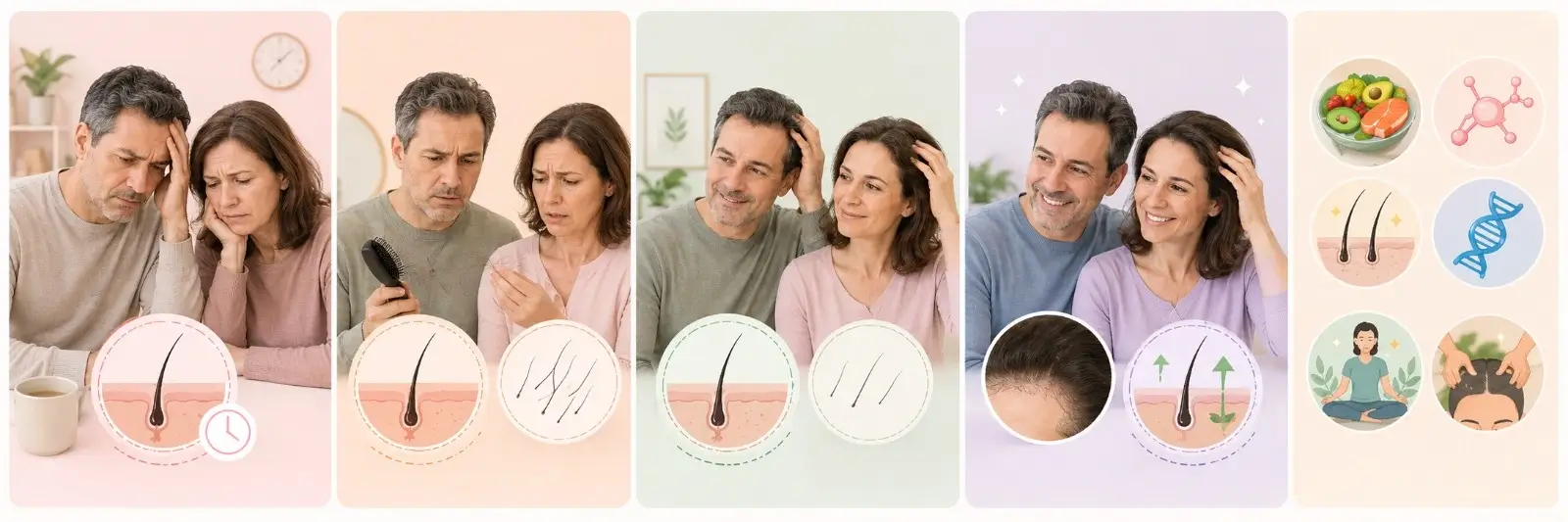
Hair grows in cycles. Each strand goes through a growth phase, a resting phase, and a shedding phase. When the body experiences strong physical or emotional stress, more hairs than usual may shift into the resting phase too early.
This condition is commonly known as telogen effluvium. It often causes noticeable shedding two to three months after the stressful event. According to Cleveland Clinic, telogen effluvium is usually temporary and hair often starts to regrow once the trigger is resolved.
Stress may also worsen other hair loss conditions. For example, Mayo Clinic notes that high stress levels can be associated with telogen effluvium, alopecia areata, and trichotillomania.
Types of Stress-Related Hair Loss
Not all stress-related hair loss looks the same. The type of shedding depends on how stress affects the body and scalp.
Type of Hair Loss | What Happens | Common Signs |
Telogen Effluvium | Stress pushes more hairs into the shedding phase. | Diffuse shedding, more hair in the shower or brush. |
Alopecia Areata | The immune system attacks hair follicles. Stress may be one possible trigger. | Round or patchy areas of hair loss. |
Trichotillomania | Stress or anxiety causes repeated hair pulling. | Broken hairs, uneven patches, or thinning in specific areas. |
If hair loss is sudden, patchy, painful, or continues for more than a few months, it is best to speak with a dermatologist or healthcare professional.
Cortisol and Hair Loss: What Is the Connection?
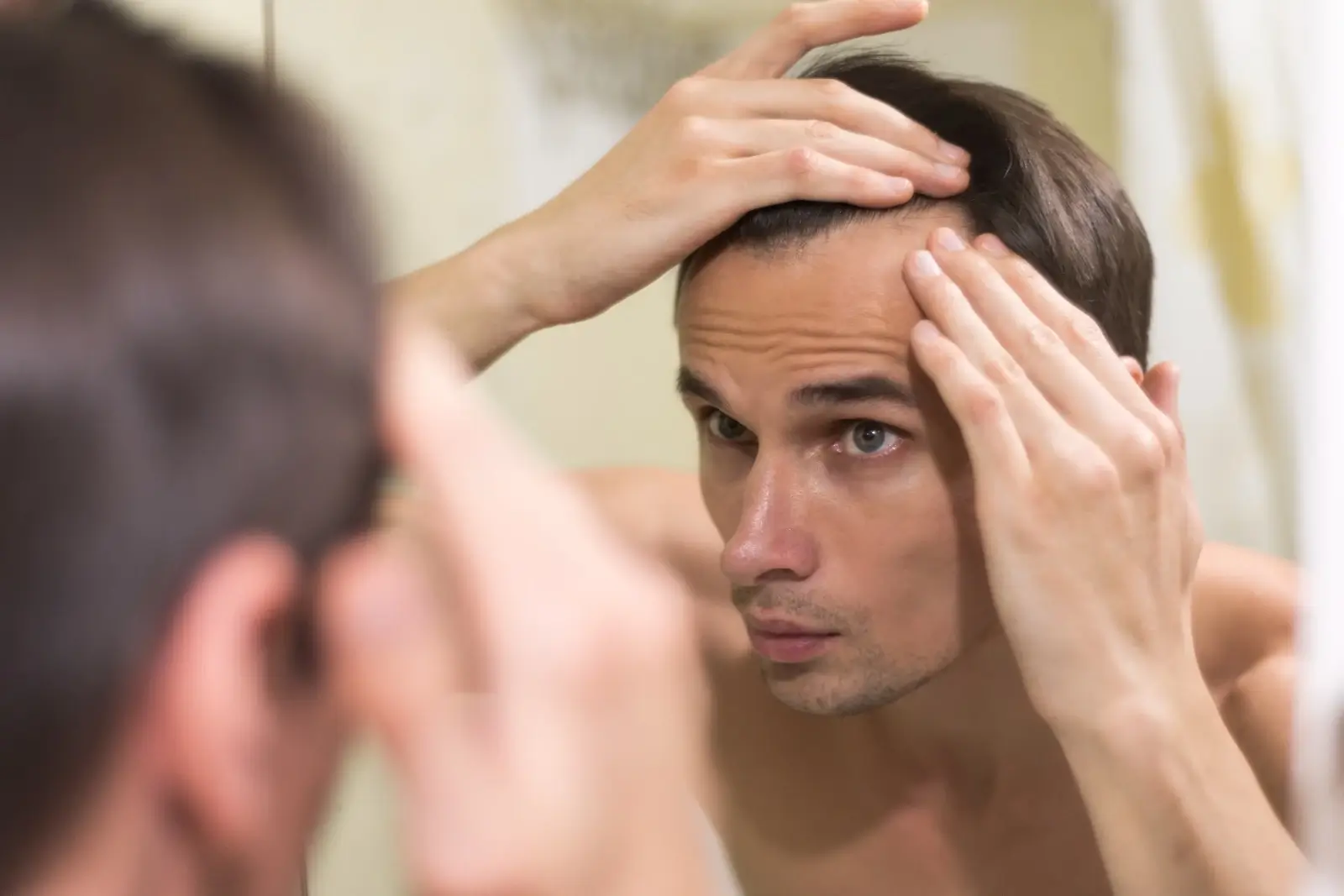
Cortisol is often called the “stress hormone.” It helps the body respond to pressure, but when cortisol stays high for too long, it may interfere with healthy hair growth.
Research supported by the National Institutes of Health found that chronic stress hormones can affect hair follicle stem cells in animal studies, helping explain how stress may slow or interrupt hair growth.
High cortisol levels may also affect the structure and function of the hair follicle environment. A review on hormones and hair growth notes that elevated cortisol is linked with changes in important follicle-supporting components such as proteoglycans and hyaluronans.
In simple terms: when the body remains in “stress mode,” hair may receive less support for normal growth.
Natural Stress Management Techniques for Hair Health
Managing stress will not create overnight hair growth, but it can help support the conditions your body needs for recovery. Consistency matters more than perfection.
Improve Your Sleep Routine
Sleep is when the body repairs itself. Poor sleep can increase stress levels and make recovery slower. Try to keep a regular sleep schedule, reduce screen time before bed, and create a calm nighttime routine.
Add Gentle Movement
Exercise helps regulate stress hormones and supports circulation. Walking, stretching, yoga, pilates, swimming, or light strength training can all be helpful. The goal is not to exhaust the body, but to release tension.
Practice Breathwork or Meditation
Even five minutes of slow breathing can calm the nervous system. Try breathing in for four seconds, holding for four seconds, and breathing out slowly for six seconds. This can be especially useful before sleep or during stressful workdays.
Eat Enough Protein and Nutrients
Hair is made mostly of protein, so restrictive diets can make stress-related shedding worse. A balanced diet with protein, iron, zinc, omega-3 fatty acids, B vitamins, and vitamin D supports healthy hair growth.
Be Gentle With Your Hair
During shedding periods, avoid aggressive brushing, tight hairstyles, excessive heat styling, and harsh chemical treatments. Stress-related hair loss is often temporary, but fragile hair needs extra care while recovering.

Adaptogens for Hair Health: Can They Help?
Adaptogens are plant-based ingredients traditionally used to help the body adapt to stress. Popular examples include ashwagandha, rhodiola, ginseng, holy basil, and reishi mushroom.
They do not directly “cure” hair loss. However, they may support stress balance, sleep quality, and overall wellness, which can indirectly support healthier hair conditions.
Before using adaptogens, speak with a healthcare professional, especially if you are pregnant, breastfeeding, taking medication, have thyroid problems, or have an autoimmune condition.
Recovery Timeline: When Will Hair Grow Back?
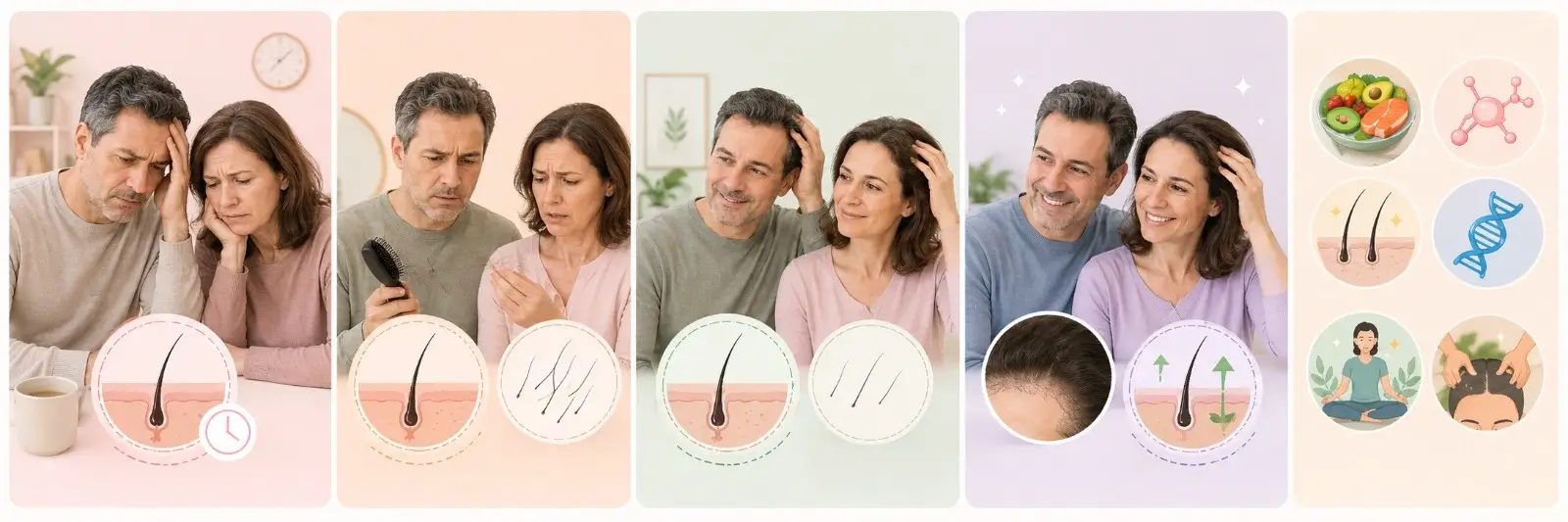
Stress-related hair shedding usually does not happen immediately. In many cases, shedding appears around two to three months after the stressful event. This delay can make it difficult to connect the hair loss to the original trigger.
For telogen effluvium, Cleveland Clinic states that shedding often lasts three to six months, and new growth usually appears after the shedding phase improves.
A general recovery timeline may look like this:
0–3 months after stress: Hair may begin shifting into the resting phase.
2–4 months after stress: Shedding becomes more noticeable.
3–6 months: Shedding often starts to slow if the trigger is resolved.
6–12 months: Hair density may gradually improve as new growth becomes visible.
Recovery depends on the cause, nutrition, hormones, scalp health, genetics, and whether the stress is ongoing.

Tips to Break the Stress and Hair Loss Cycle
Stress can cause hair shedding, and hair shedding can create even more stress. This cycle is common, but it can be managed.
Start with small, realistic changes:
Prioritize sleep and recovery.
Eat balanced meals with enough protein.
Avoid crash dieting.
Use gentle hair care products.
Reduce heat and chemical damage.
Practice daily stress relief.
Track shedding without obsessing over it.
Seek medical advice if shedding is severe or persistent.
Supporting hair growth is not only about what you apply to the scalp. It is also about helping the body feel safe, nourished, and balanced again.
Final Thoughts
Stress and hair loss are closely connected, especially when stress becomes intense or long-lasting. Cortisol can influence the hair growth cycle, and conditions like telogen effluvium may cause noticeable shedding months after a stressful period.
The encouraging part is that stress-related hair loss is often reversible. With better stress management, proper nutrition, gentle hair care, and time, many people see their hair gradually return to its normal growth pattern.
If your hair loss is patchy, sudden, painful, or does not improve, consult a dermatologist to identify the exact cause and receive the right guidance.

FAQs
References
Cleveland Clinic. Telogen Effluvium: Symptoms, Causes, Treatment & Regrowth.
Used for: telogen effluvium, delayed shedding, temporary hair loss, 3–6 month recovery timeline.
https://my.clevelandclinic.org/health/diseases/24486-telogen-effluvium
Cleveland Clinic. Does Stress Cause Hair Loss?
Used for: stress-related hair loss explanation, telogen effluvium, shedding after stressful events.
https://health.clevelandclinic.org/can-stress-cause-hair-loss
Mayo Clinic. Stress and hair loss: Are they related?
Used for: connection between high stress levels, telogen effluvium, alopecia areata, and trichotillomania.
https://www.mayoclinic.org/healthy-lifestyle/stress-management/expert-answers/stress-and-hair-loss/faq-20057820
National Institutes of Health. How stress causes hair loss.
Used for: chronic stress hormones and their effect on hair follicle stem cells in animal studies.
https://www.nih.gov/news-events/nih-research-matters/how-stress-causes-hair-loss
National Institute on Aging. How stress causes hair loss.
Used for: stress hormone effects on hair follicle stem cells and the dermal papilla.
https://www.nia.nih.gov/news/how-stress-causes-hair-loss
Choi S, Zhang B, Ma S, et al. Corticosterone inhibits GAS6 to govern hair follicle stem-cell quiescence. Nature. 2021.
Used for: scientific basis of chronic stress hormones keeping hair follicles in an extended resting phase.
https://pubmed.ncbi.nlm.nih.gov/33790465/
Thom E. Stress and the Hair Growth Cycle: Cortisol-Induced Hair Growth Disruption.
Used for: cortisol, proteoglycans, hyaluronans, and the hair follicle environment.
https://europepmc.org/article/med/27538002
Mayo Clinic. Hair loss – Symptoms and causes.
Used for: general medical context on hair loss causes and when to seek evaluation.
https://www.mayoclinic.org/diseases-conditions/hair-loss/symptoms-causes/syc-20372926